What can you plant NOW and have fruit within a year? Fruiting bushes are the answer! Many of them will start producing fruit their second year. Plus, there is a whole variety of fruits that don’t ever even make it to the grocery stores.
Here is what we have planted so far, and what may be available for purchase as nursery plants.
Black Currants
Enormously popular in northern European countries, yet relatively unknown in the United States, black currants grow well in Kansas. Clusters of dark purple berries have a strong musky flavor that we love straight off the bush, but they also make excellent jams, preserves, and wine. They are full of antioxidants and minerals, making them one of the healthiest fruits you can possibly eat. The bushes grow about 4′ tall and wide, and should be spaced accordingly. In the hot summers of Kansas, they like a little afternoon shade (though ours are pretty much in the full sun). With more shade, they won’t produce quite as much fruit, but will still be productive. In Kansas, they should be mulched in the summer to help the soil retain moisture. They are semi-self-fruitful, meaning that they will produce some fruit with only one variety, but if they have a pollination partner of another variety, they will make even more .
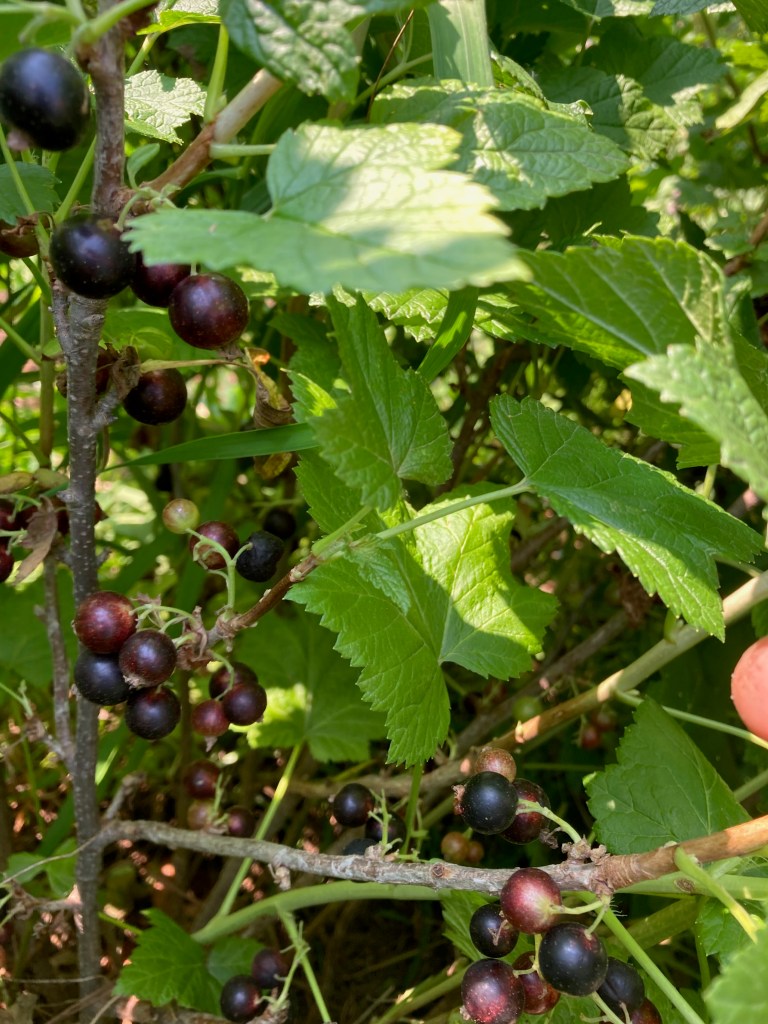
Varieties:
MINAJ SMYRIOU (description coming soon)
TITANIA (description coming soon)
AMERICAN BLACK (description coming soon)
CONSORT BLACK (description coming soon)
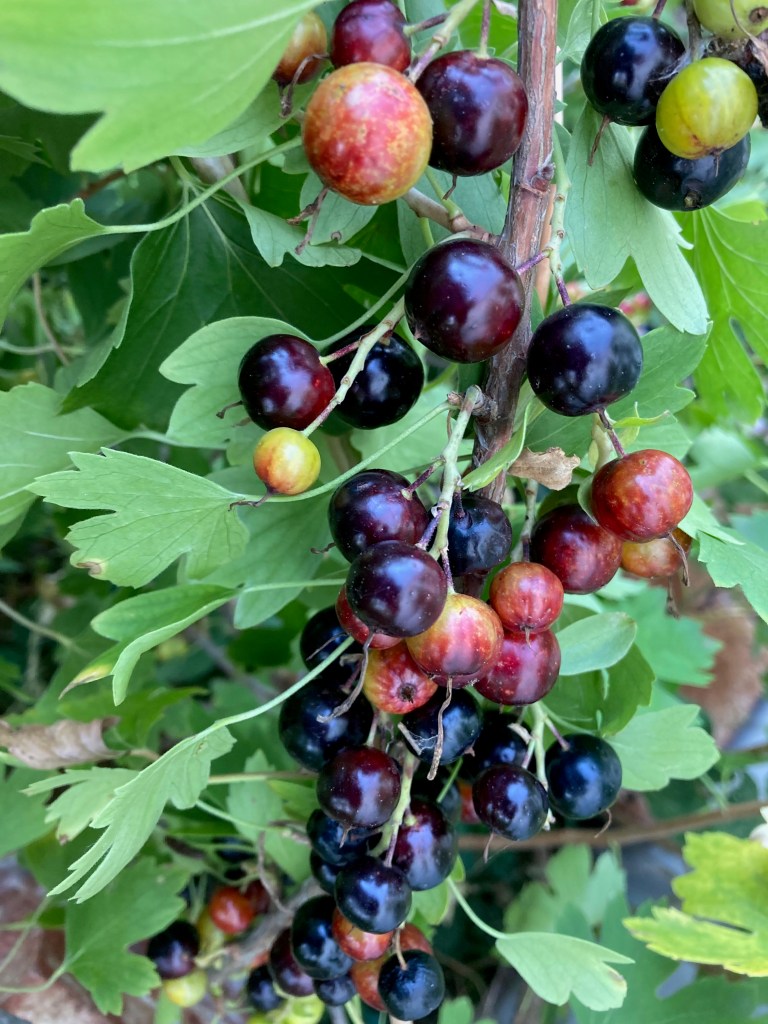
NATIVE CLOVE (BUFFALO) CURRANT: Yellow blossoms in the spring (sometimes blooming as long as a month) that will scent the air with the smell of cloves. If you have two genetically different plants, they will make an abundance of dark purple fruit that, while not as good as European black currants, are certainly edible. We planted them along many of our pathways for the clove-scented blooms and have been happily surprised by the surplus of berries.
Gooseberries
Elderberries
Goumi Berries
Aronia Berries

