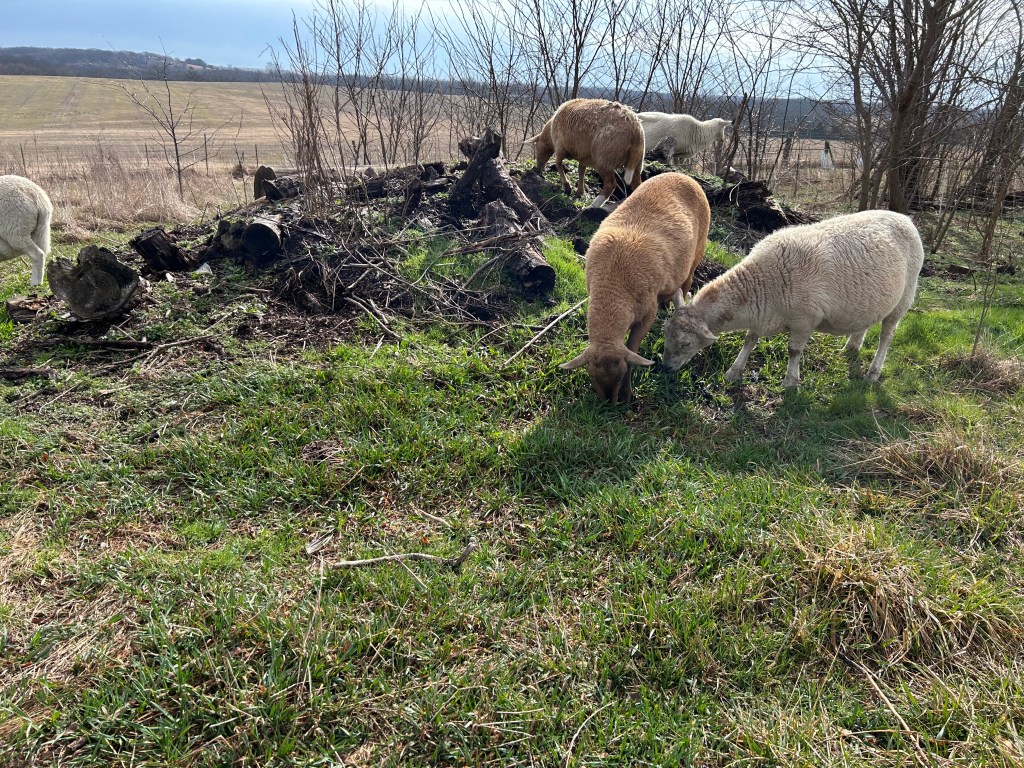
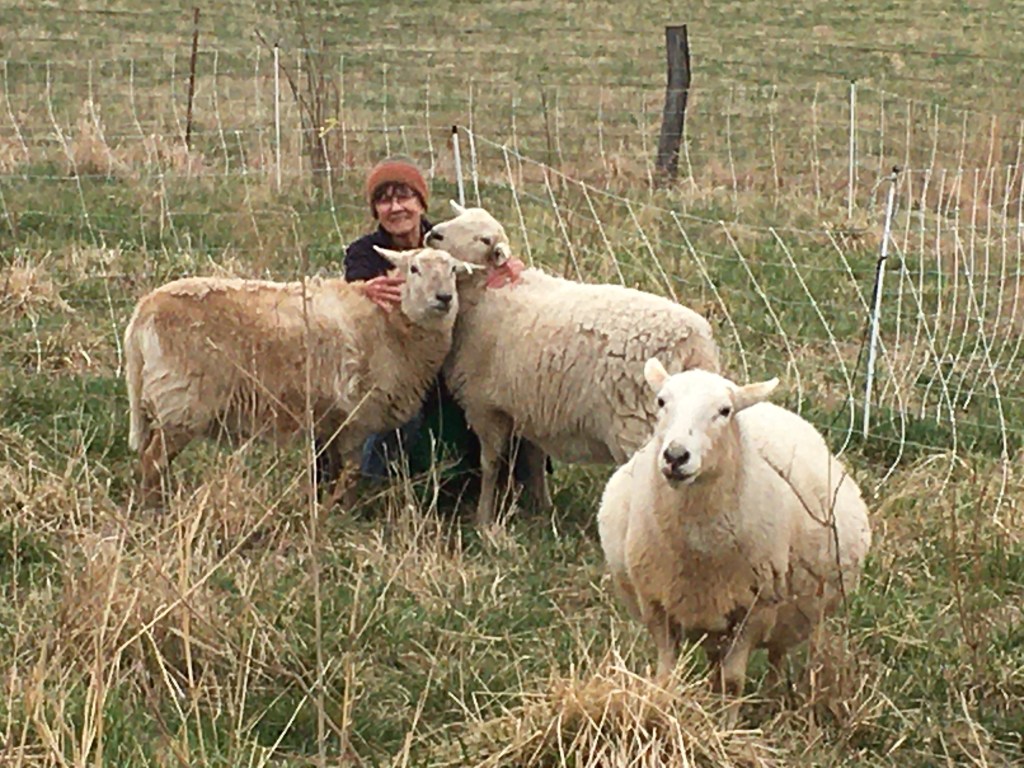
Fig Hill Farm sheep gorging on first little patch of really green grass, March 6, 2026.
Every year there comes a day in the spring, when, after days of seeking out those elusive blades of green grass, the sheep get turned into a paddock where the grass is lush and growing. Instead of having to search for those rare blades, it’s a veritable buffet, and they stuff themselves. It comes after some rain and some warm weather. The grass is ready for spring and so are the sheep.
Every year I worry that I am going to kill my sheep by suddenly changing their diet. I tell myself that they’ve been getting some green grass every day, that they’ve been working up to this, that if they were in the wild, they’d somehow have to deal with stumbling upon abundance. And the paddock, after all, isn’t very big, so it’s not like they can be gorging all day long. But still I worry.
And yesterday afternoon, half of them were acting very strange–lying down with their heads stretched out in front of them on the ground. When I’d approach them, they’d scramble to their feet, but then stand there with their heads hanging down. Very weird indeed. About half of them were doing that. Maybe they had belly-aches. I probably would if I were a sheep. I wonder if I should call someone, who could maybe tell me what I should do to help them. I wonder if I’ve killed them. Why don’t I ever learn my lesson about spring grass?
I stand and watch them for a long time. Their sides aren’t extended like they would be if they were bloating, and after a bit, the worst of them starts eating more of the green grass. Okay, I guess. I throw them some more hay, because by evening, they’ve pretty much eaten down all the new green stuff, and go in to my own dinner. I really hope I haven’t killed my sheep.
And in the morning, I’m greeted by eight live perky-eyed sheep, hoping that I’ll open up a new paddock for them. The answer is no, today is a day for hay. They can have a new paddock tomorrow. And I remember that I have his fear every single spring, and (so far) every single spring, they’ve been fine. Phew!
We got sheep to help manage our pastures, of which we have about seven acres. That’s grass, forbs (non-grass herbaceous things—i.e. wildflowers and “weeds”), tree saplings, clover, and an abundance of “noxious weeds” that we are required by law to eradicate. We’re not much interested in mowing, but without something to knock all that back periodically, the trees and noxious weeds would take over until we had a cedar and hedge-apple forest instead of a pasture. And we do love our open spaces!
Also, we eat meat. And lamb is delicious!
So sheep were the natural solution. They eat the pasture, keeping it under control, and we eat them. Perfect!
ROTATIONAL GRAZING
Sheep grazing in the orchard at Fig Hill Farm.
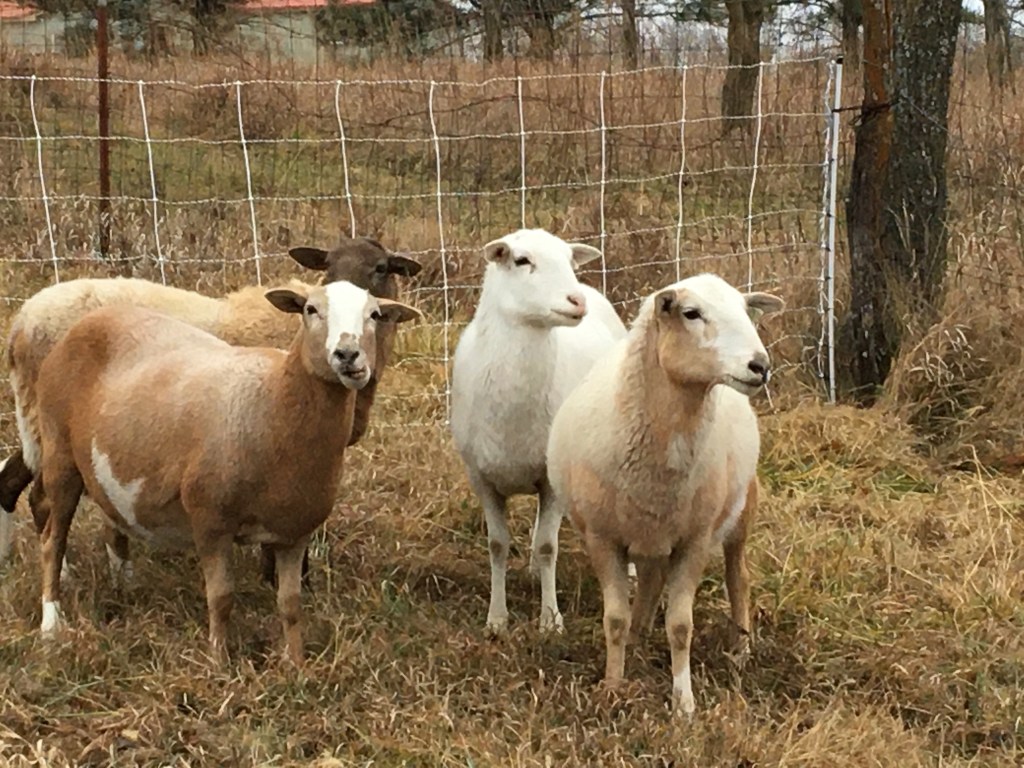
We do rotational grazing with our sheep, where each day they are moved into a new paddock, contained by electric net fencing. Staying in small paddocks, the sheep are forced to eat both the desirable grasses and the less-desirable things, which keeps them from overgrazing the “good” stuff and ignoring the rest, and then that patch of pasture isn’t touched again for months. This is both good for the pasture in that it gets a good recovery period to regrow, strengthening the grass and forbs, and for the sheep because they won’t be back to that piece of ground until long after any internal parasite eggs would have hatched and then perished without having another sheep come along and eat it. The pasture also benefits from the sheep trampling the things they don’t eat, and pooping and peeing everywhere.
OUR FIRST SHEEP
We got our first four sheep in December 2020. Two months later our herd had expanded to nine, and we had to put into practice how we were going to manage our expanding numbers. The plan has always been to keep the most productive ewes, and sell or eat the rest. The first year was easy, because four out of the five lambs were ewe lambs. We kept all of them, and took the ram lamb to the meat processing plant.
Our first trip to the meat processing plant.
CULLING
So we then had eight ewes—too many! Which ones to cull? The choices were actually pretty easy. One of the original ewes had a problem with her udder, and only produced milk on one side. It worked out for the single lamb she had that year, but it’s not ideal. She also tended towards skinniness, as did another one of the original ewes. Whatever the cause, those two ewes were not staying fat on our pastures, so they were the ones who had to go. More delicious meat!
Culling makes your stock better. If you only keep the best performing animals, then their offspring is more likely to be high performing as well. Our requirements for keeping a sheep: 1) They have to do well on just grass. If they don’t keep good body condition on just grass, then they’re gone. 2) They produce strong lambs, preferably twins (though this year we had two ewes produce strong triplets. 3) They’re good mothers, who require no help lambing and who are attentive to their lambs and feed them well.
What we want are sheep who do well with OUR management system. We’ve sold some of the ewe lambs (the ones we would have kept had we been expanding our herd), but others are culled. Another ewe that will be culled this year had a stillborn her first year, and a very very puny single lamb this year, and hardly has any udder at all, so she fails at the producing strong lambs point. Culled animals are not wasted, though. They make great meat!
THE PROBLEM WITH EDNA
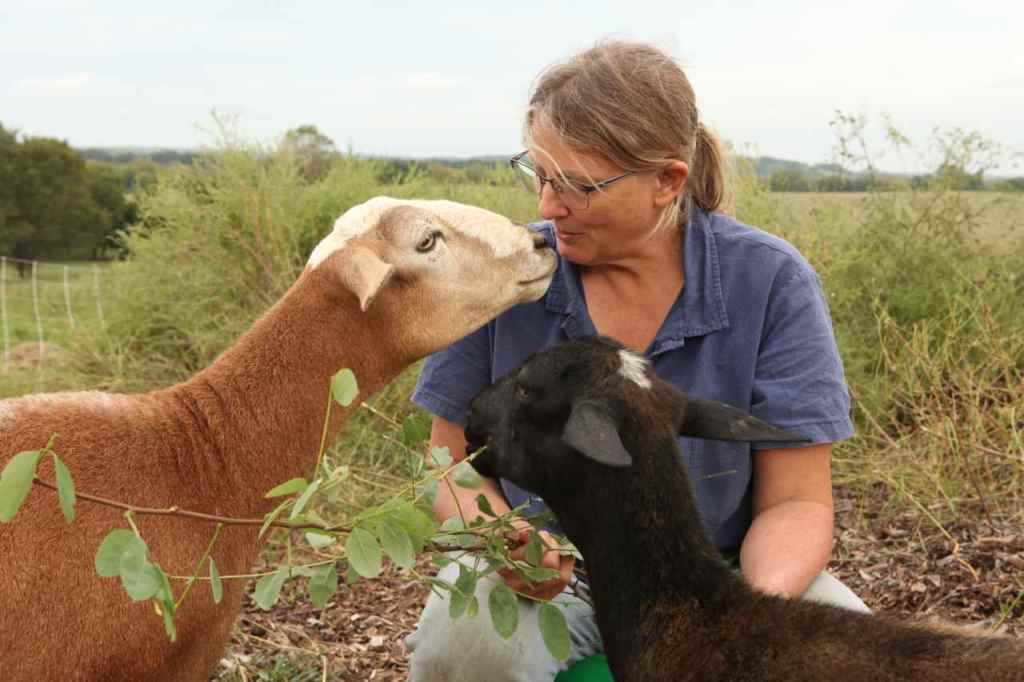
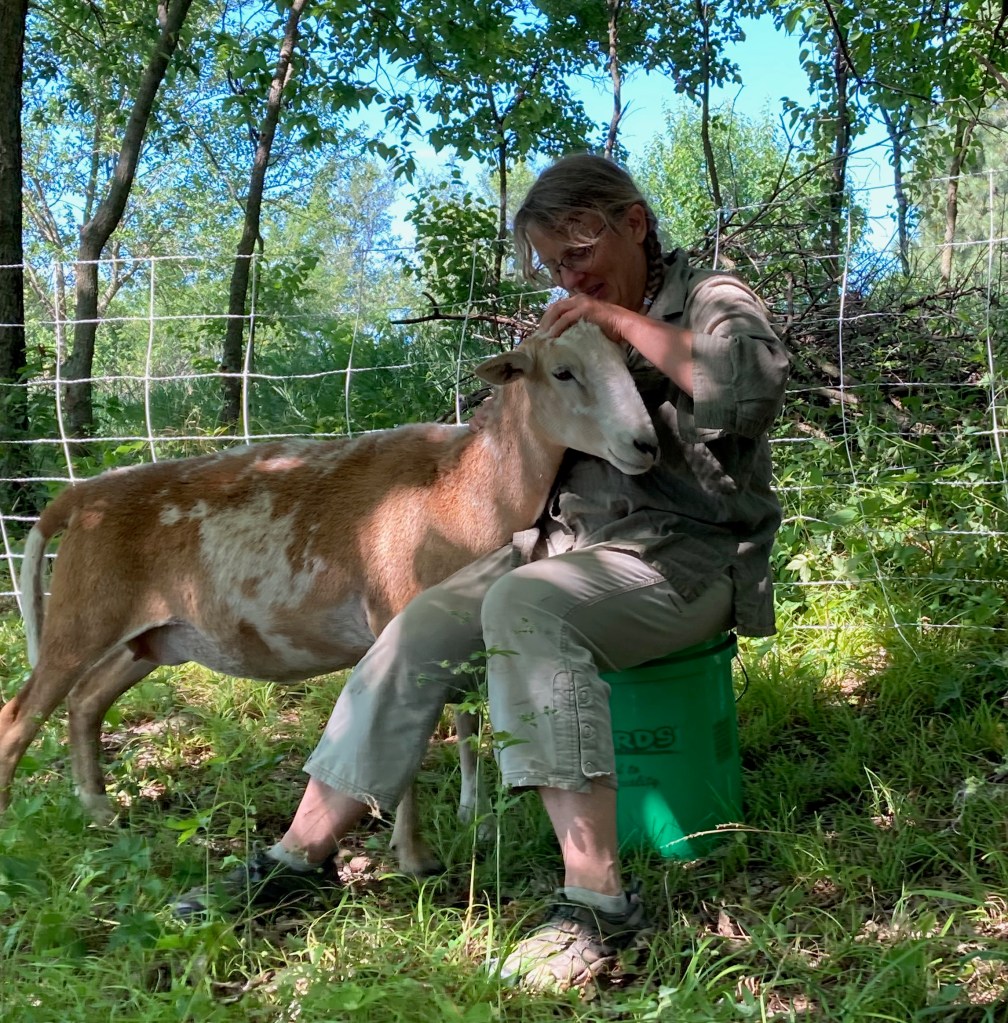
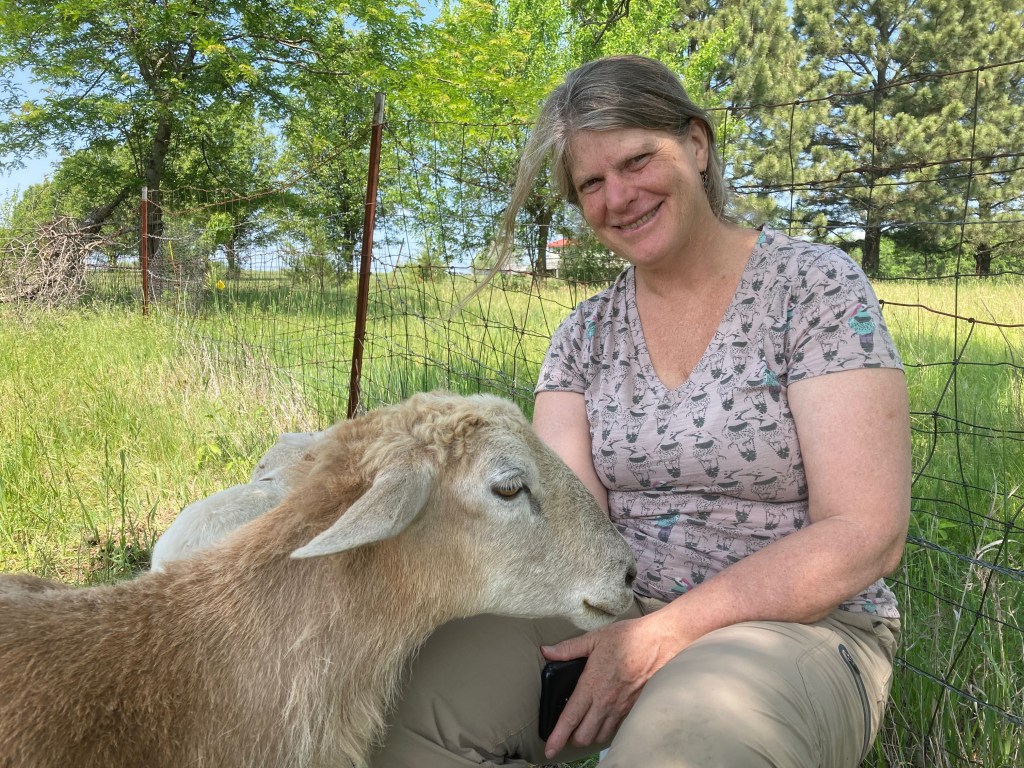
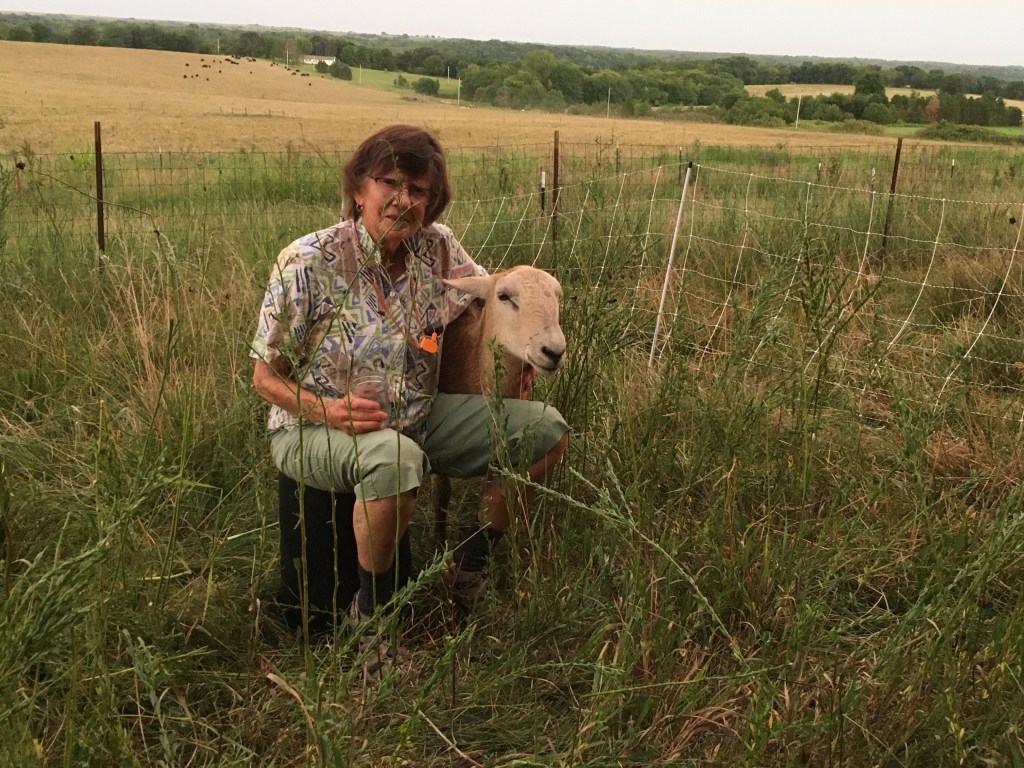
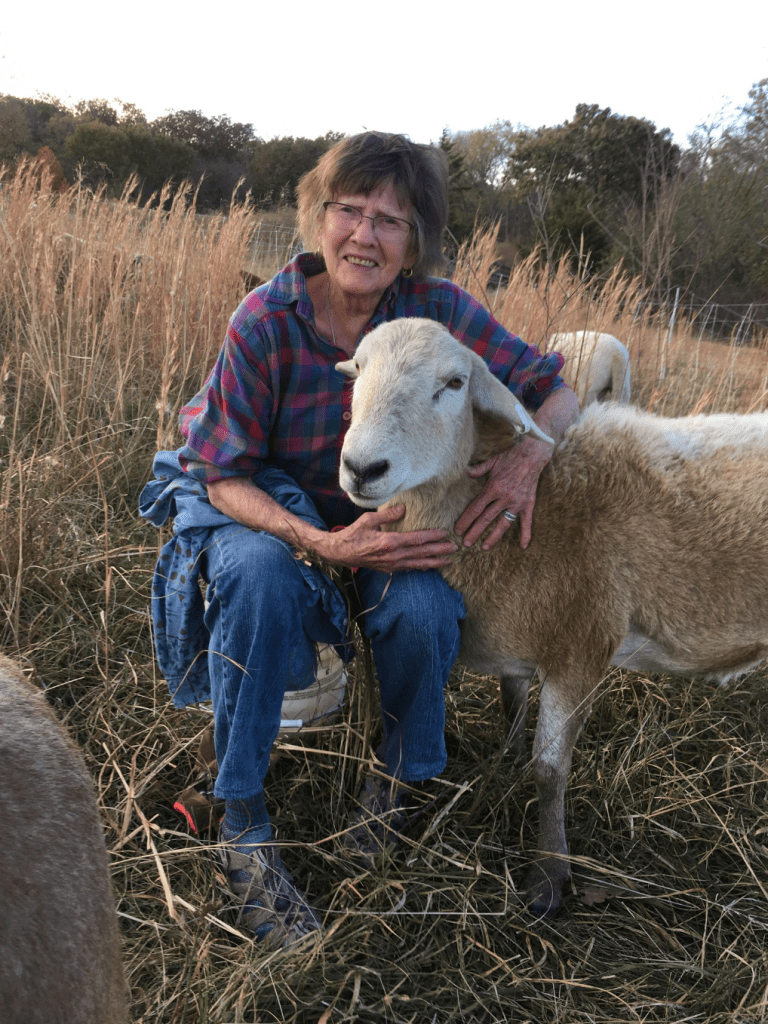
Our sheep are not pets. We have them for a purpose–multiple purposes! 1) Pasture Management, 2) Meat, and 3) Beauty, for there is nothing more beautiful than seeing a group of sheep grazing in a pasture. But we didn’t consider a fourth, very important purpose, which was the connection we would have with them. We ALL enjoy them, and my mother and I actually spend considerable time sitting with them watching them, and scratching their necks. Even Byron has his sheep moments!
And they have names. We decided to name them because it makes it easier to talk about them, as in “Lois looks like she’s carrying triplets” or “Gladys has been limping all week” or “Celeste is still nursing that lamb that’s almost as big as she is.” But they also have personalities. Some are wild and won’t let anyone near them, and others are super-friendly.
The problem with Edna, though, is that she’s my mom’s favorite. Even though we are eating the healthiest meat we could possibly eat, and our sheep are leading the most ideal lives, she’s a bit uncomfortable with eating our “pets” (she doesn’t share our idea that they’re NOT pets!). So far we’ve enjoyed Agnes, Doris, Hester, and LoBoy, and Gladys will be on the menu this fall. She keeps saying, “You can’t eat Edna!”
But even our favorites have to qualify to stay. Thank goodness Edna is keeping her contract with us. I don’t particularly want to eat Edna either. She was our first lamb, after all, and is by far the friendliest. But she has to do well on grass (which she does–she was the fattest sheep last summer) and be a good mama (she is raising triplets this year). As long as she keeps it up, we’ll get our meat elsewhere.