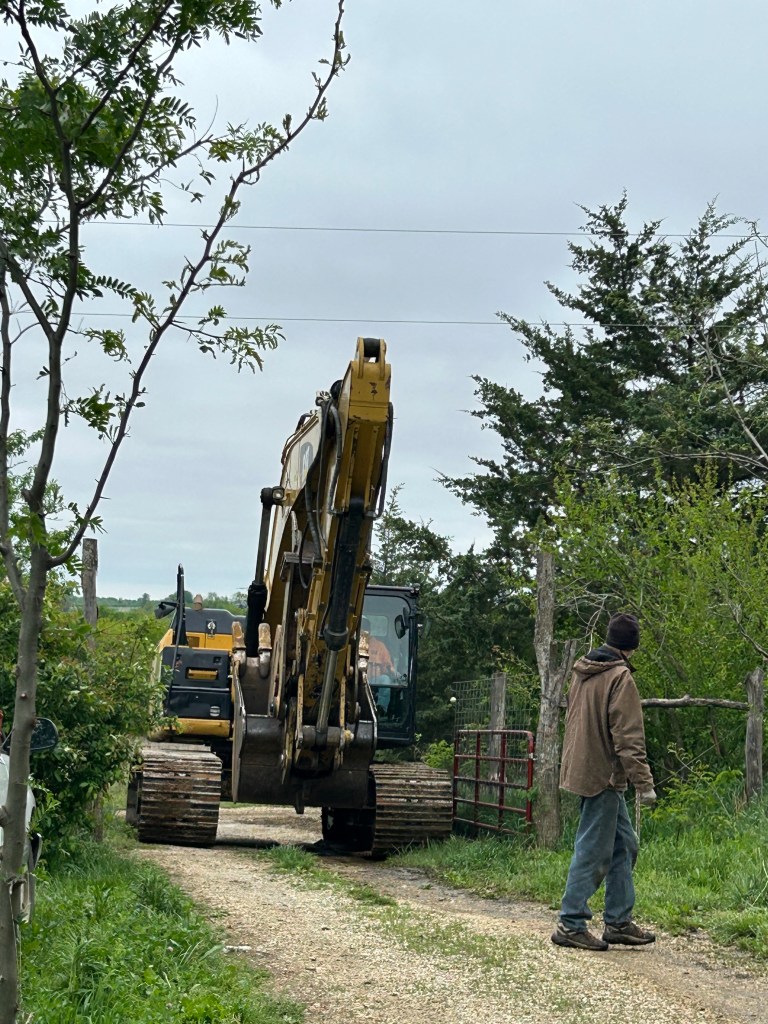
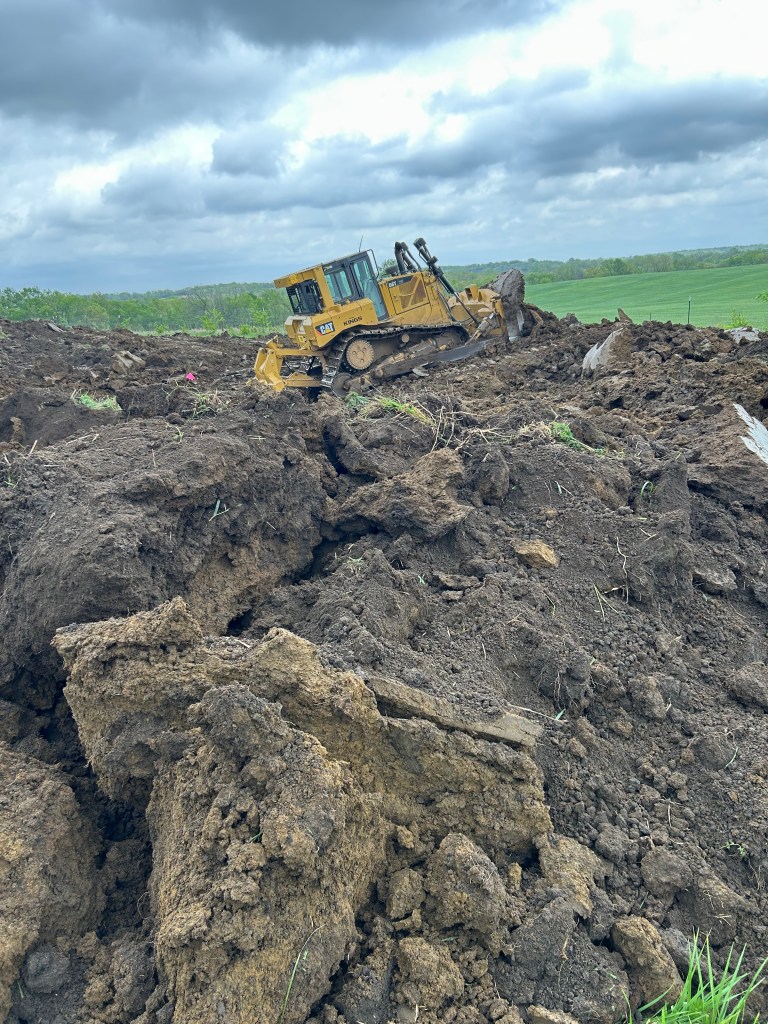
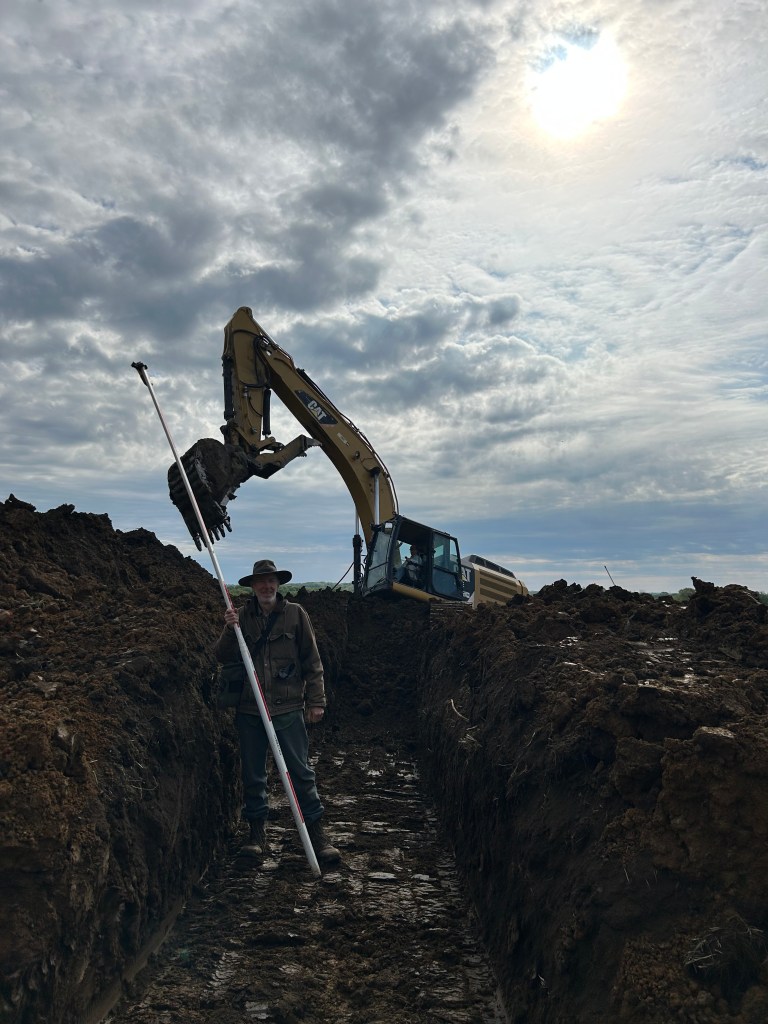
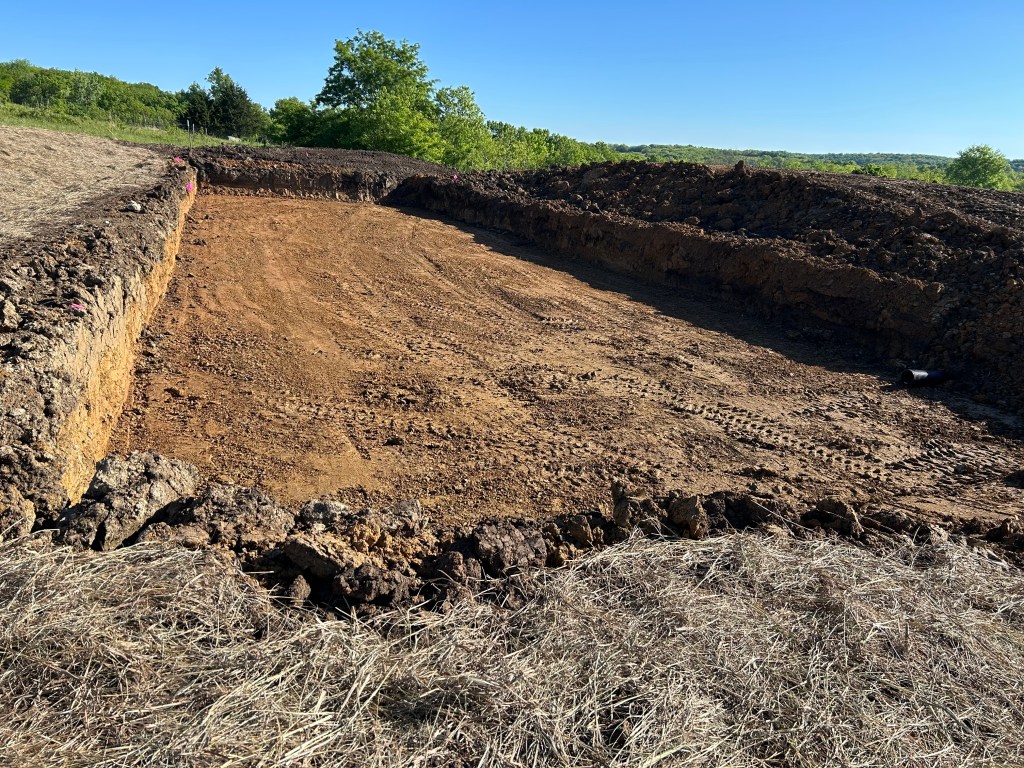
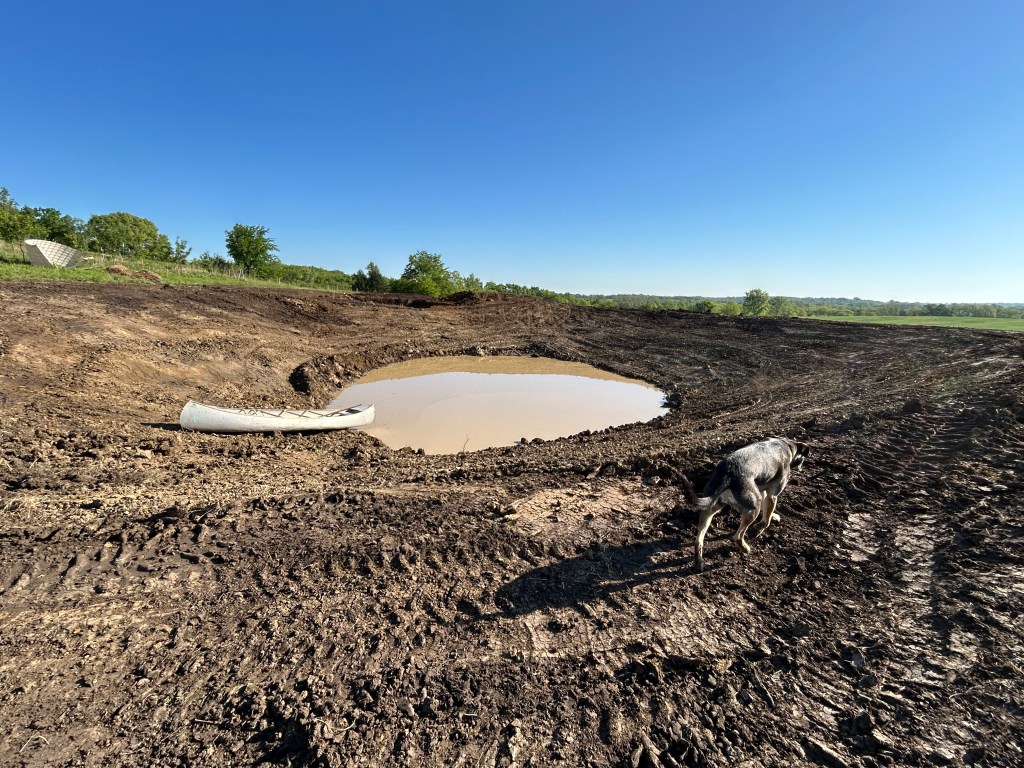
The greenhouse project is finally in the works. Excavation done for two side-by-side greenhouses, and a retention pond to capture water from them.
***********
Our greenhouses will be used both to grow food and to serve as an educational tool in community food security.
Most year-round commercial greenhouses use tremendous amounts of fossil energy. Our greenhouse will be different, using two tried and true systems, that have not yet hit the mainstream.
The first one, which we have now started, will use an in-ground heat exchange system. Daytime warm air is moved through the underground perforated pipes and is withdrawn at night to warm the space in the wintertime. The cycle is reversed in the summer to provide some daytime cooling.
The second (which will be built later, after our house) is the passive solar model, where only the south side of the green house is glazed. The energy of the sun during the day is captured by a large thermal mass wall in the north, which will then release that heat during the night.
This will extend the active growing season in both the early and late months, which will be a bonanza for fig and other Mediterranean plants. During the winter, temperatures will stay above freezing so that we can grow cold-weather vegetables year round. Cross ventilation options in the summer will keep it from burning up without using large volume exhaust fans.
This is a design where all of the costs are up front. Once it is built, it will require almost no outside inputs.
Greenhouses are not simple. Byron has spent countless hours researching this–figuring out the structures and systems, and their resource footprints, and is very excited about these designs.

