I love kale! I like it chopped up fresh into a salad with broccoli, walnuts, raisins, olive oil and lemon juice, and I like it lightly cooked in just about everything. But growing kale for me just seemed like too much work. Doing any kind of cultivation encouraged weeds to grow, and my weeds are crazy-vigorous. The first two years I had my garden, I had forests of 8 foot tall ragweed. Now that we’re living at the farm, and I can easily stop by and pull a row of weeds, they’re much more under control (this is the year of the green bristle grass), but it just seems like so much work to cultivate an area, put in kale plants, weed them all season, and then have to start all over again the next year.
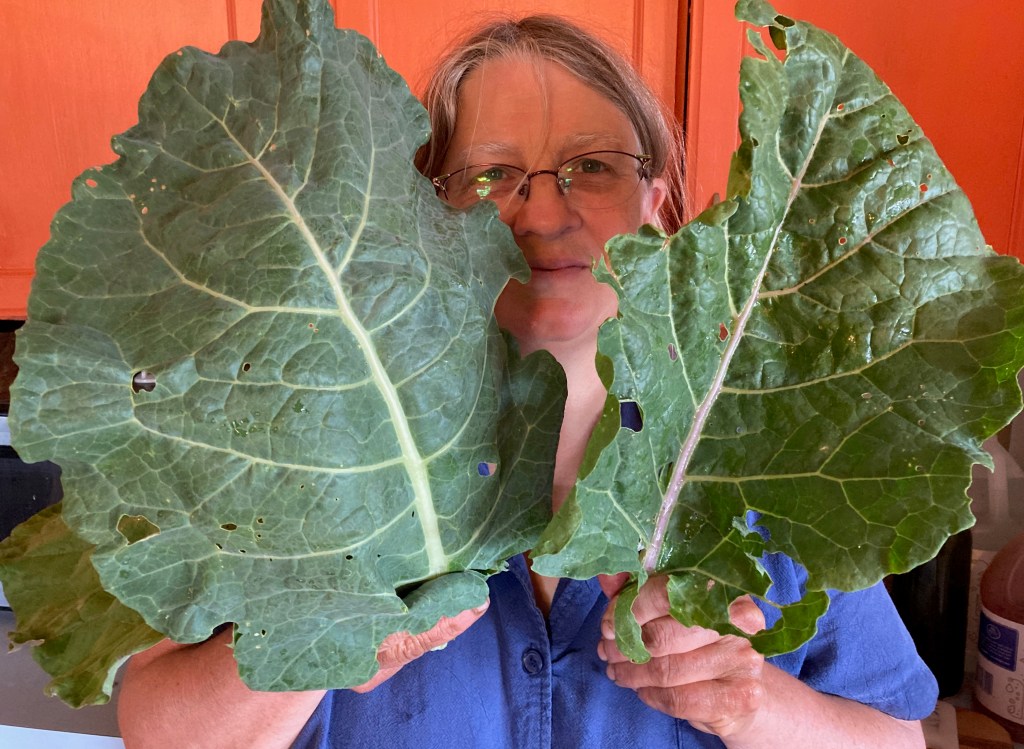
But then I read about perennial kale on the Experimental Farm Network, in particular, Chris Homanic’s “Homesteader’s Kaleidoscopic Perennial Kale Grex”, that started in 2011 with two seldom-flowering perennial tree kales, ‘Purple Tree Collards’ and ‘Daubenton’, which were then crossed and recrossed which a whole bunch of other kales and brassicas, resulting in a “grex” or “flock” of related kales that had great variability in terms of size, color, shapes, etc. You might also consider it a land race for kale. You plant out a number of seeds, and see what ones do the best in your microclimate, and which you like the best.
So that’s what I did. I started a flat of seeds of 90-ish seeds, which all promptly germinated, gave some away to three different friends, and planted about 70 myself. I probably planted them too close together. Chris recommends 3 feet in all directions, but since I didn’t know if they would be truly perennial, that seems like a lot of space for an experiment, so I planted them 18” apart, in a staggered double row. And they grew GREAT! I really hoped that they were truly perennial here in NE Kansas, presumably zone 6. I knew that I would never get around to covering them in the winter, or maybe I would, but I couldn’t count on it. We’ll have to wait and see.
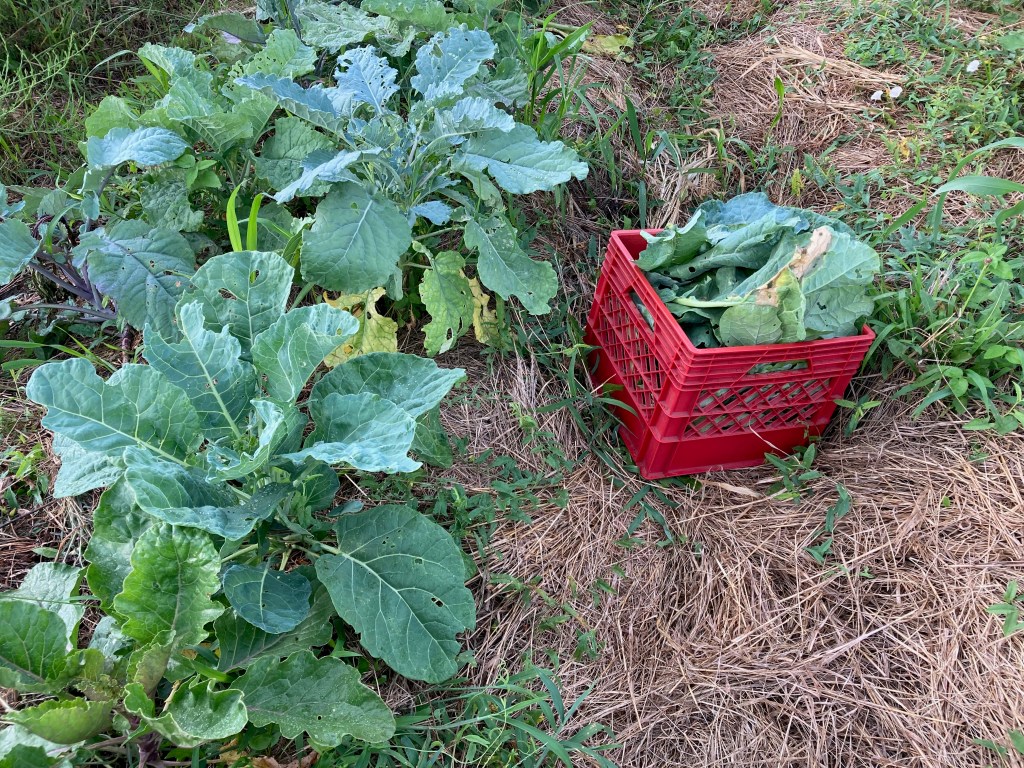
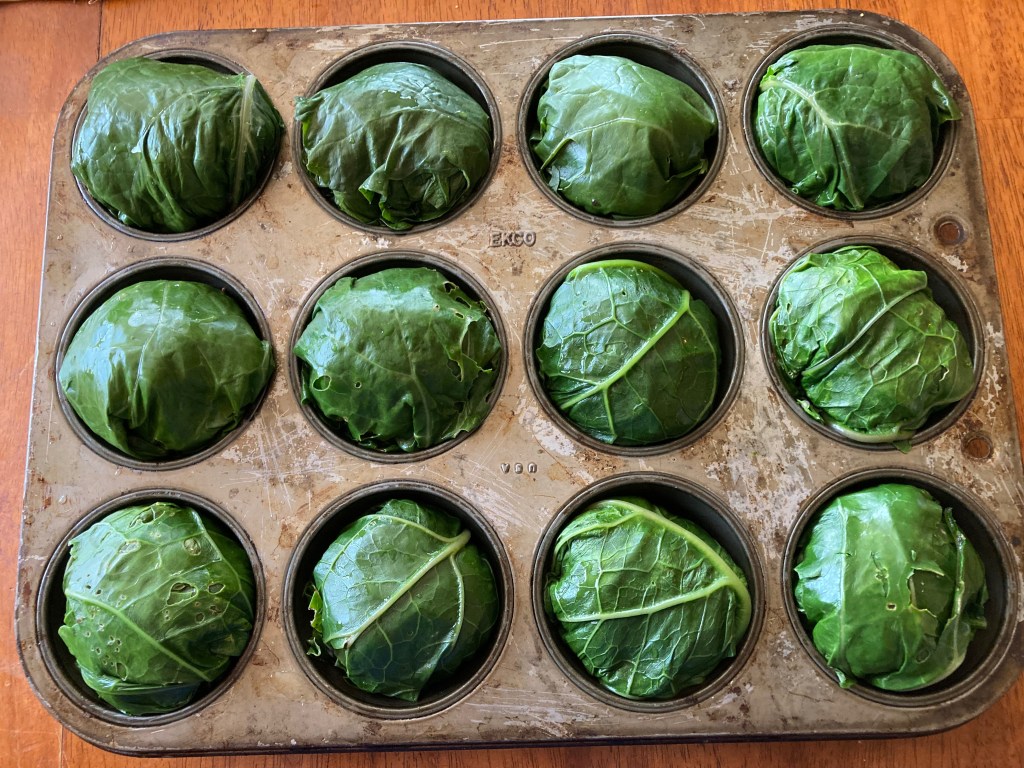
But the kale was beautiful. And delicious! We were harvesting a handful of giant kale leaves every day to eat with dinner, and I also harvested extra to steam-blanch and freeze as kale balls to use in the winter. These were from mid-July, and each ball is 8 or 9 giant leaves—perfect for January stews.
Later in July, I noticed some of them were being attacked by cabbage worms. Not all of them. Just a dozen or so. I duly noted which ones they were (I have them numbered); those would be ones we would not want to propagate. Just like culling unproductive ewes, we would cull our unproductive kales.
But by the second week of August, they were ALL being decimated. And I had a lot of questions. Will the cabbage worms totally kill the plants or will they bounce back if I could get rid of the worms? I picked a whole bunch of worms off of about 4 plants, and gave them to the chickens. It would take forever to pick them off of all 70 plants. Was there any way I could bring the chickens in for them to harvest them themselves?

Then I read somewhere about someone cutting off all the decimated leaves, which helped the plants rejuvenate, so I did that with about 25 of the plants. I put the wormy leaves in a bucket and dumped the bucketfuls of leaves in for the chickens, which is a whole lot easier way of harvesting the worms for them. And then squished the ones remaining in the crevices on the stems. We’ll see if that works. But then what about the plants that still have a gazillion worms on them?
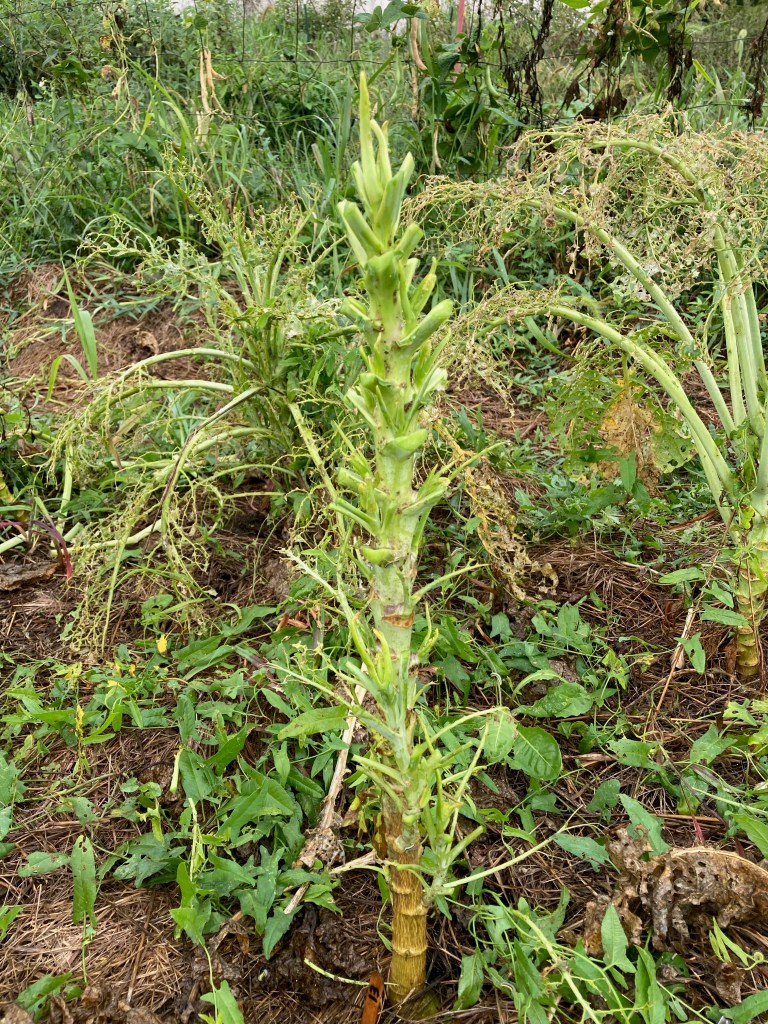
Then I noticed was that the four plants on the end of the row (next to the outer rim of the garden weeds (Johnson grass, ragweed, hedge parsley, native plum trees, etc), there were hardly any worms or worm damage. Why is that? Does the essentially hedgerow harbor beneficial worm-eating insects? Or does the presence of other plants confuse the cabbage moths that lay the eggs that turn into the worms? Should maybe I be thinking about spreading out my perennial kales into various places in the garden and on the farm rather than having one dedicated row? Lots to think about. I do have two small patches, one amidst some currant bushes and pepper plants (and weeds), and one amidst willow cuttings, tillage radishes (and weeds), and those little patches are both decimated as well.
Or do I need to use row covers during cabbage moth season? (And when exactly is that anyway? I don’t actually remember seeing any this year, though I certainly have in the past.) I guess I need to be more diligent about watching my kale, and see what is going on with it, so I can take steps before this total destruction.
Because I really want perennial kale growing in my garden!
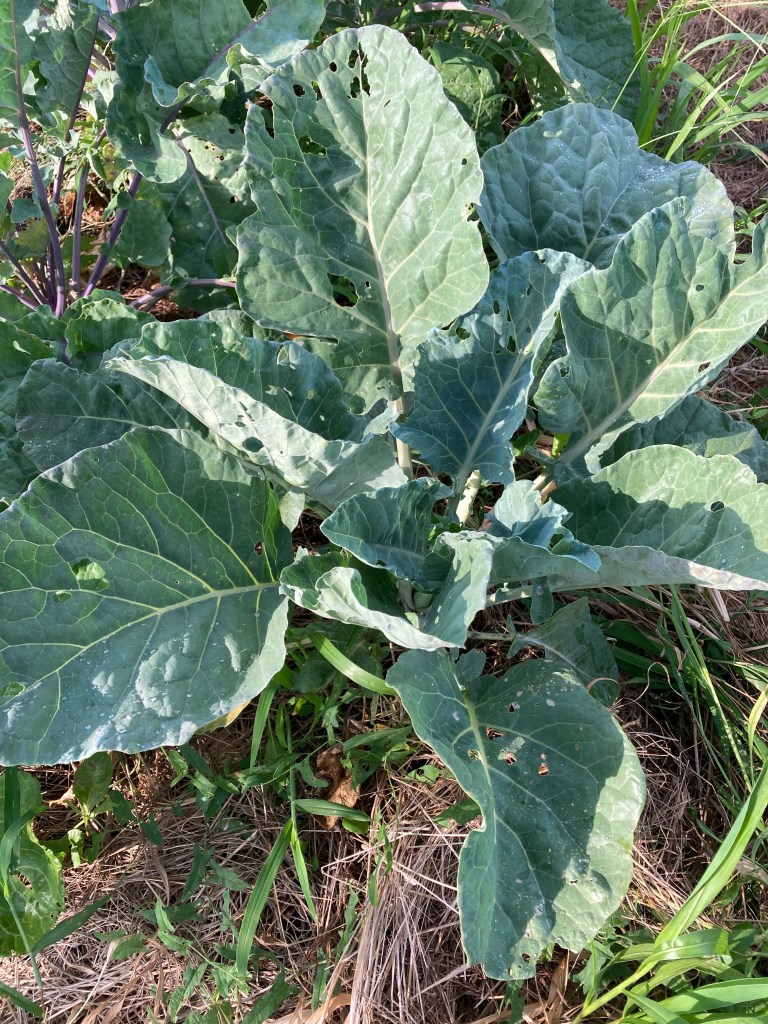


 Fig Hill Farm & the Kansas Figgery
2 replies on “Kale vs the Cabbage Worms”
Ugh, cabbage worms! They even found my Brussels sprouts on 3rd floor balcony in apt complex many years ago. I gave up on kale, and grow chard instead. Different family (beet), no pests. Good luck!
LikeLiked by 1 person
I love chard too, and grow a lot of it in the garden, and yes, no pests for it at all. But this kale is supposed to be perennial, which is a big draw for me. So we’ll see how it goes.
LikeLike