Categories
Garden

Kale vs the Cabbage Worms

I love kale! I like it chopped up fresh into a salad with broccoli, walnuts, raisins, olive oil and lemon juice, and I like it lightly cooked in just about everything. But growing kale for me just seemed like too much work. Doing any kind of cultivation encouraged weeds to grow, and my weeds are crazy-vigorous. The first two years I had my garden, I had forests of 8 foot tall ragweed. Now that we’re living at the farm, and I can easily stop by and pull a row of weeds, they’re much more under control (this is the year of the green bristle grass), but it just seems like so much work to cultivate an area, put in kale plants, weed them all season, and then have to start all over again the next year.
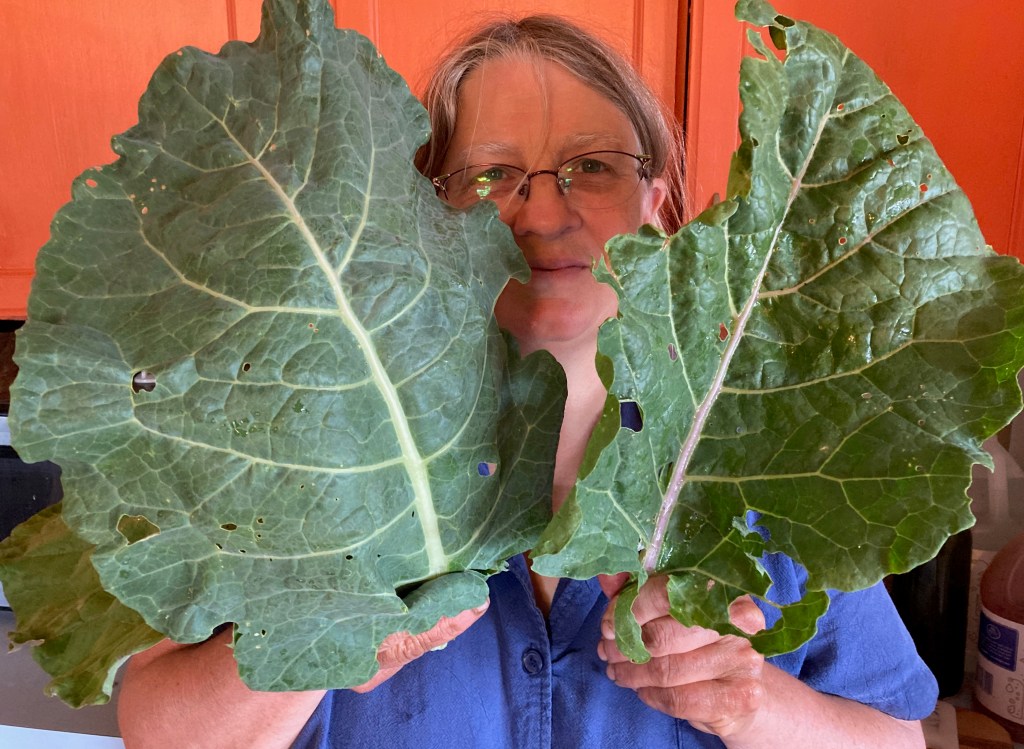
Kale in the kitchen!

But then I read about perennial kale on the Experimental Farm Network, in particular, Chris Homanic’s “Homesteader’s Kaleidoscopic Perennial Kale Grex”, that started in 2011 with two seldom-flowering perennial tree kales, ‘Purple Tree Collards’ and ‘Daubenton’, which were then crossed and recrossed which a whole bunch of other kales and brassicas, resulting in a “grex” or “flock” of related kales that had great variability in terms of size, color, shapes, etc. You might also consider it a land race for kale. You plant out a number of seeds, and see what ones do the best in your microclimate, and which you like the best.

So that’s what I did. I started a flat of seeds of 90-ish seeds, which all promptly germinated, gave some away to three different friends, and planted about 70 myself. I probably planted them too close together. Chris recommends 3 feet in all directions, but since I didn’t know if they would be truly perennial, that seems like a lot of space for an experiment, so I planted them 18” apart, in a staggered double row. And they grew GREAT! I really hoped that they were truly perennial here in NE Kansas, presumably zone 6. I knew that I would never get around to covering them in the winter, or maybe I would, but I couldn’t count on it. We’ll have to wait and see.
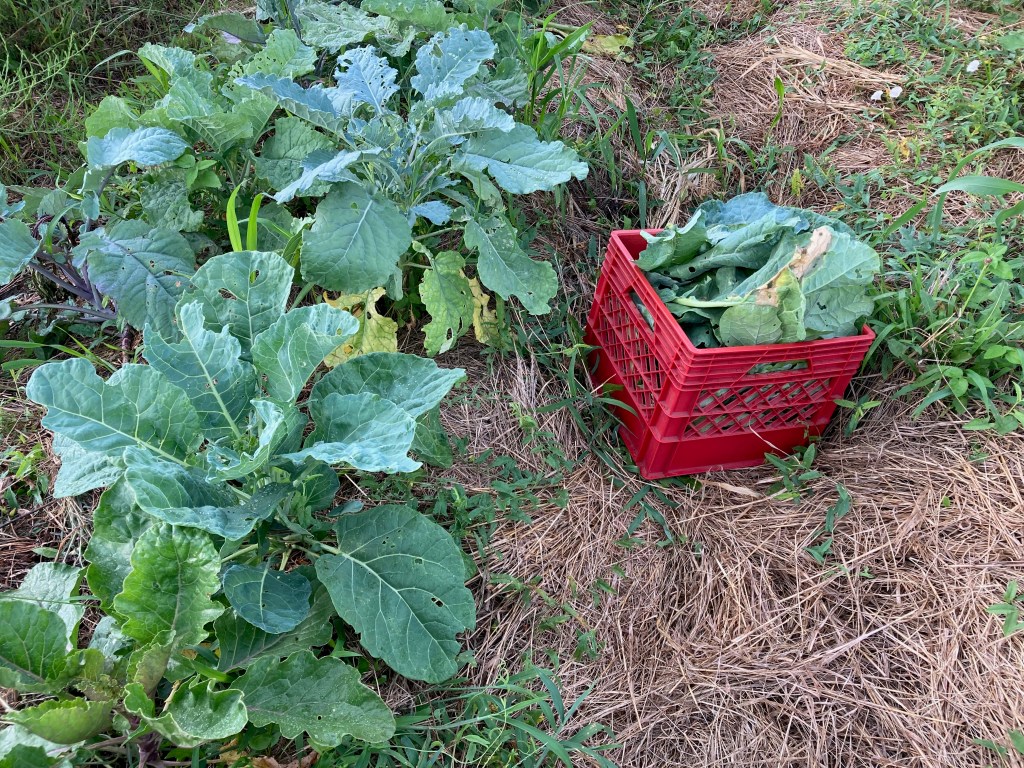
Kale in the garden!

But the kale was beautiful. And delicious! We were harvesting a handful of giant kale leaves every day to eat with dinner, and I also harvested extra to steam-blanch and freeze as kale balls to use in the winter. These were from mid-July, and each ball is 8 or 9 giant leaves—perfect for January stews.
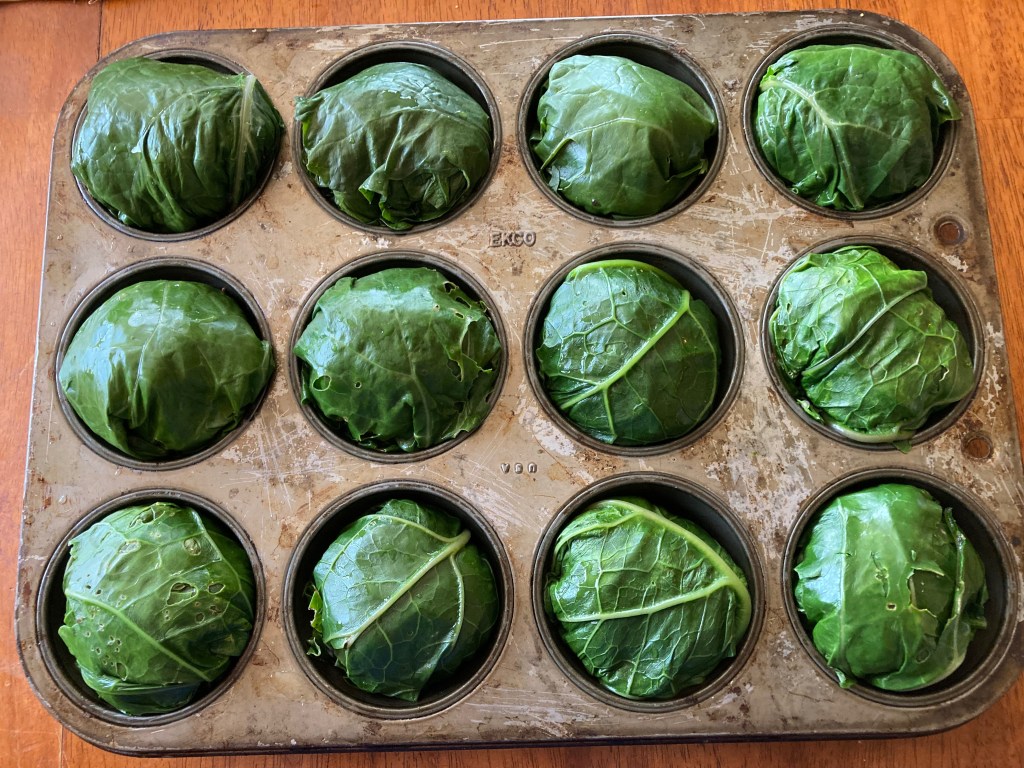
Kale balls ready for the freezer–after which they’d be transferred to a zip lock bag.

Later in July, I noticed some of them were being attacked by cabbage worms. Not all of them. Just a dozen or so. I duly noted which ones they were (I have them numbered); those would be ones we would not want to propagate. Just like culling unproductive ewes, we would cull our unproductive kales.

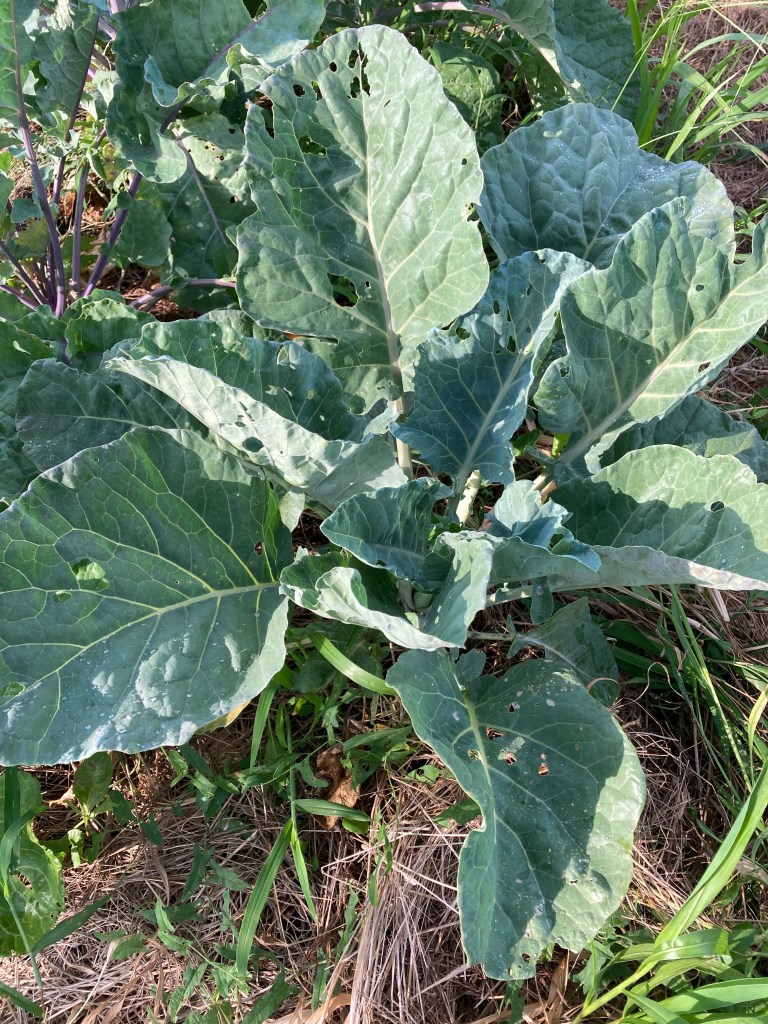
But by the second week of August, they were ALL being decimated. And I had a lot of questions. Will the cabbage worms totally kill the plants or will they bounce back if I could get rid of the worms? I picked a whole bunch of worms off of about 4 plants, and gave them to the chickens. It would take forever to pick them off of all 70 plants. Was there any way I could bring the chickens in for them to harvest them themselves?

Cabbage worm (and harlequin bug) decimation…..

Then I read somewhere about someone cutting off all the decimated leaves, which helped the plants rejuvenate, so I did that with about 25 of the plants. I put the wormy leaves in a bucket and dumped the bucketfuls of leaves in for the chickens, which is a whole lot easier way of harvesting the worms for them. And then squished the ones remaining in the crevices on the stems. We’ll see if that works. But then what about the plants that still have a gazillion worms on them?
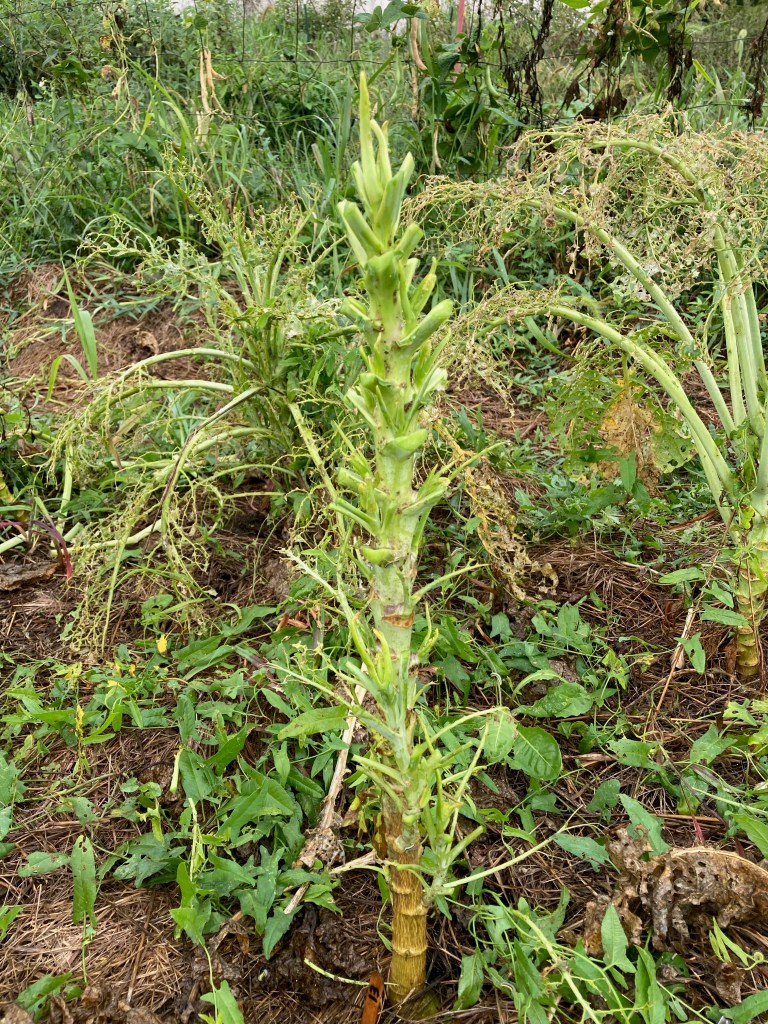
Pruned back kale plant (leaving all the growing tips).

Then I noticed was that the four plants on the end of the row (next to the outer rim of the garden weeds (Johnson grass, ragweed, hedge parsley, native plum trees, etc), there were hardly any worms or worm damage. Why is that? Does the essentially hedgerow harbor beneficial worm-eating insects? Or does the presence of other plants confuse the cabbage moths that lay the eggs that turn into the worms? Should maybe I be thinking about spreading out my perennial kales into various places in the garden and on the farm rather than having one dedicated row? Lots to think about. I do have two small patches, one amidst some currant bushes and pepper plants (and weeds), and one amidst willow cuttings, tillage radishes (and weeds), and those little patches are both decimated as well.

Or do I need to use row covers during cabbage moth season? (And when exactly is that anyway? I don’t actually remember seeing any this year, though I certainly have in the past.) I guess I need to be more diligent about watching my kale, and see what is going on with it, so I can take steps before this total destruction.

Because I really want perennial kale growing in my garden!
Categories
Animals Winter

Deep Freeze 2024

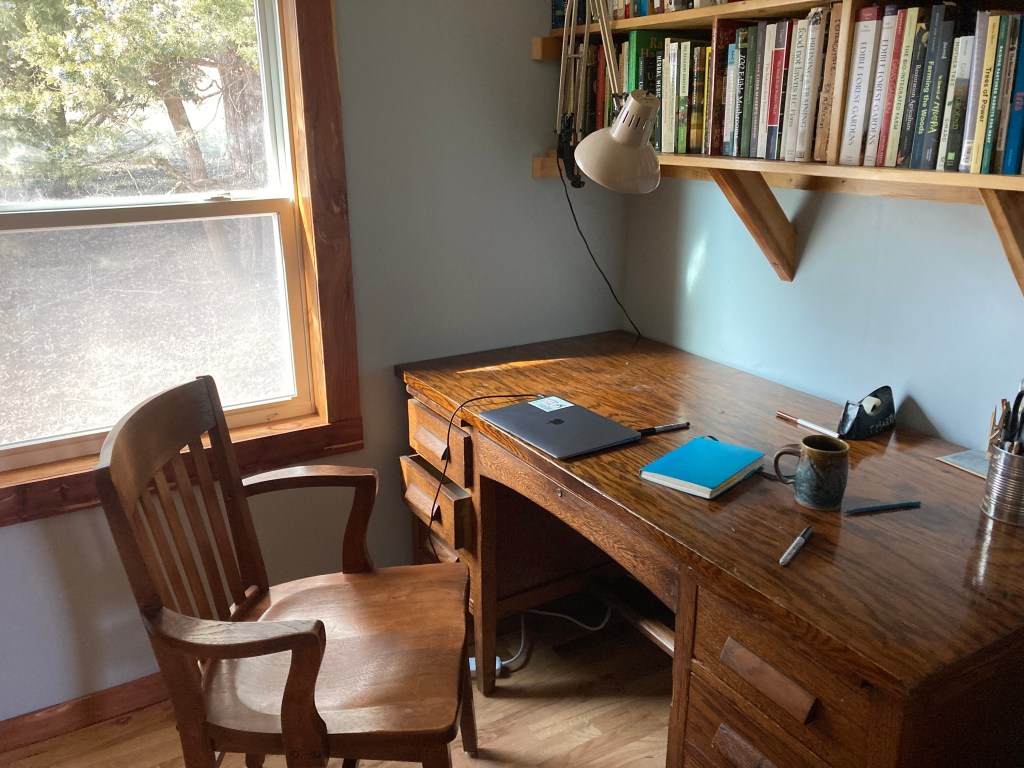
In late December 2023, Byron and I finally moved out to the farm, almost four years from the day that we bought it. Byron and I (mostly Byron) had spent the previous month and a half repairing and painting the exterior, digging a 200 foot trench to get internet installed, tiling the kitchen floor, milling some of the Eastern Red Cedar slabs our friend Amber gave us into baseboards and trim, converting the defunct windowless master bathroom into a lovely office for me, and building extensive shelves in most of the rooms. We transformed the house from merely functional into a space that we are happy to spend time in.

And just in time.

Our long, warm fall and early winter ended abruptly, first with snow and then with a plunge into sub-zero temperatures. The snow was no problem, lovely even. It blanketed our world in about six inches of white. Sure, it was a bit harder to haul hay and water for all the animals, but not that hard, and we soon had paths tromped down. Our new wood stove was working great, keeping the living room at about 74F and the rest of the house at 68F, warmer than our old drafty house in town ever got.

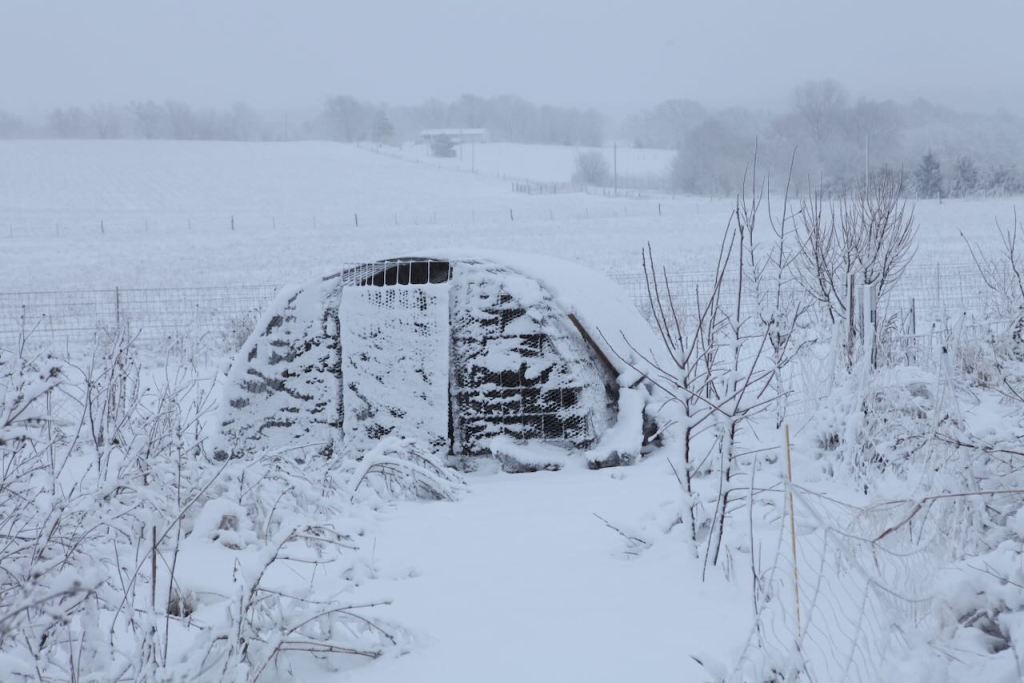
But then the bottom dropped out, with an extended forecast of lows well below zero, and highs hovering around zero, and howling north winds, and we were definitely not prepared. The chicken tractor was still quite a distance away from the big garden, where we like to park it for the winter so the chickens can scratch and poop in the garden beds and so we can plug in a water heater. The sheep were in two different paddocks–one with the breeding ewes and ram up in the far side of the neolithic woods pasture and one with the ewe lambs still a bit too small for breeding in the big garden where the chickens should have been. That split meant hauling hay and water to two different groups. We’d never gotten around to moving hay bales up to where the sheep were actually wintering, so it was multiple long, hard trudges uphill with the garden cart piled with hay. And we had a lot of plants that needed winter mulching. In the process of moving, we hadn’t taken everything out of our air-pruning beds and planted them in the ground, and we also had a bunch of prairie transplants from another friend that we hadn’t gotten in the ground, and sub-zero (Fahrenheit) temperatures would likely kill them.

So all moving houses activities stopped, and we had to go into high gear winter deep-freeze preparation.

First thing was to cover all the exposed plants–easy enough with wheel barrow loads of long-gone moldy hay that a friend had helped us procure for garden-mulching.

Then all of the sheep got moved together into the duck yard, where they have shelter from the north winds, and the electric cord that heats the duck water can also heat water for the sheep. The ducks weren’t venturing out of their house in this weather anyway. No more hauling buckets of water only to have them freeze within a half an hour. Only one hay-hauling location, a quarter of the distance that I was hauling before. Yes, the ewe lambs are now in with the ram, but they’re a month and a half older, probably fine for breeding, and the extra month and a half will have them well fed on the lush spring grass of April and May in the last two months of pregnancy.

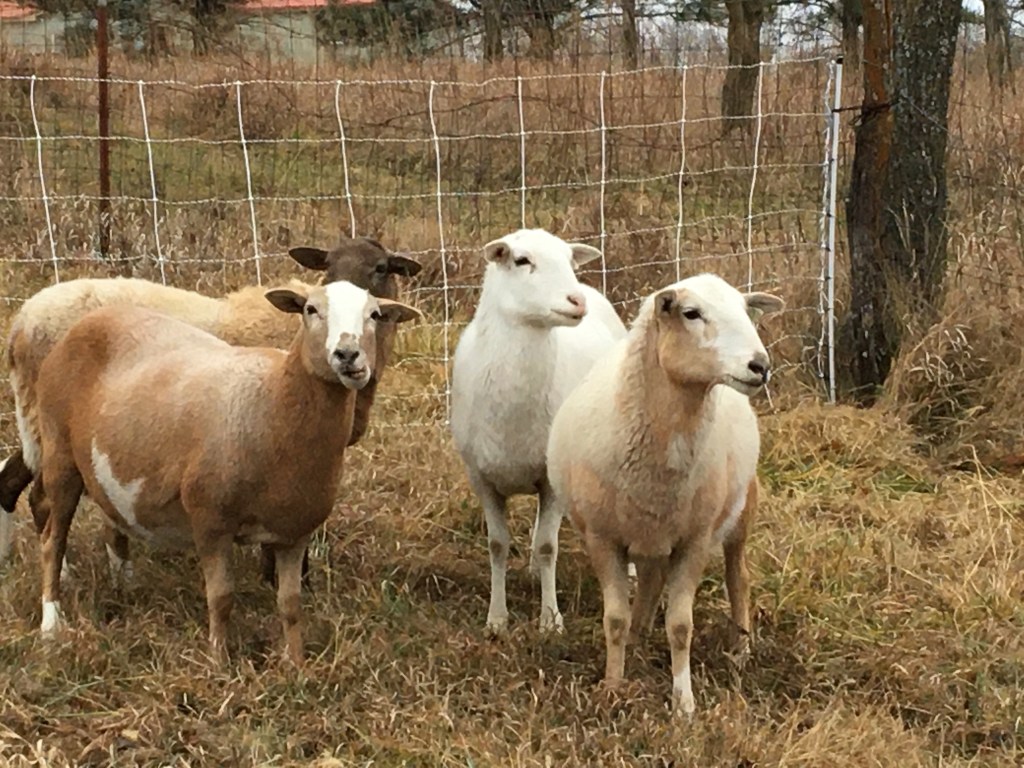
Sheep in the snow with their super-insulated wool coats

The chickens were moved into the little greenhouse, where we brooded them last fall. There was no way that we could have moved the chicken tractor, especially since the six wet inches of snow froze solid. We had to catch them one by one and carry them to the little greenhouse, which also has an electric cord for heated water. So they’ll be missing their whole electric-fenced off area, but in this weather, they’re not venturing out anyway, and at least they’re blocked from the wind and have water instead of blocks of ice.

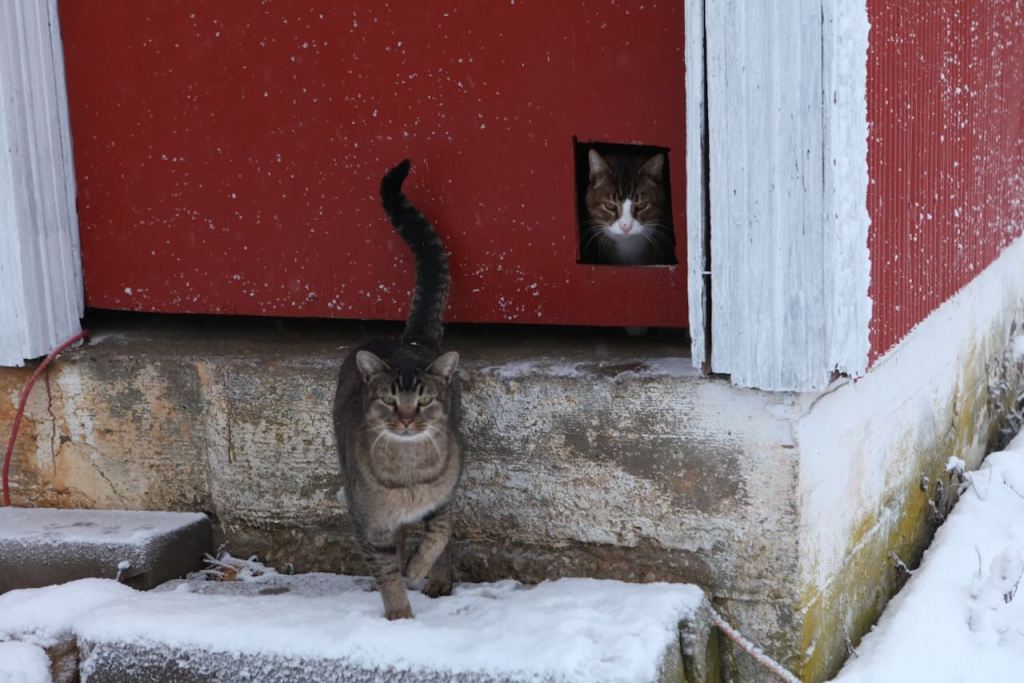
The cats were easy: two of them live in the well house, and sleep cozily in a south window, and the other two nest in hay in the barn. We’re just upping their food a bit.

Well-house cats Stretch and Simon

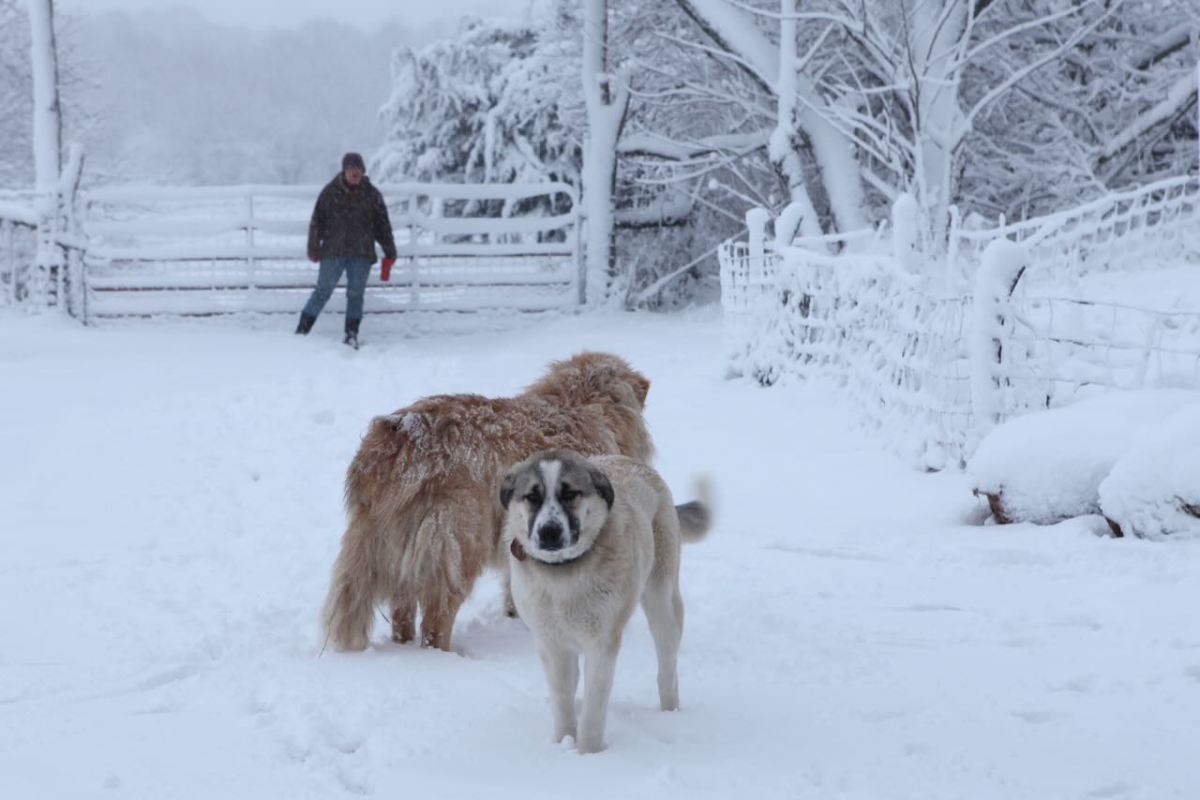
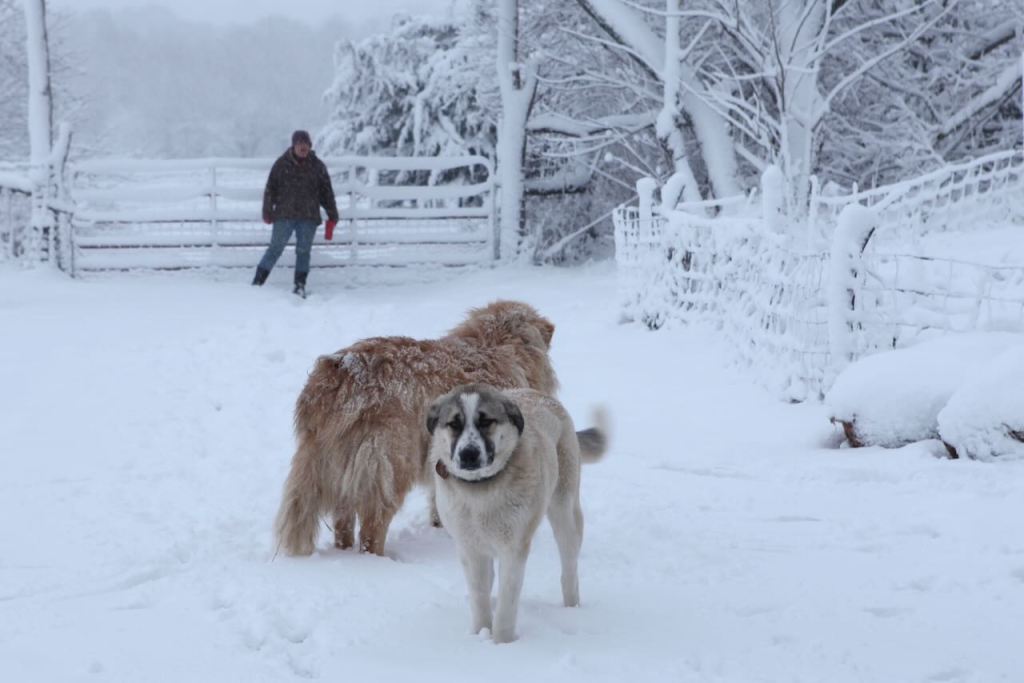
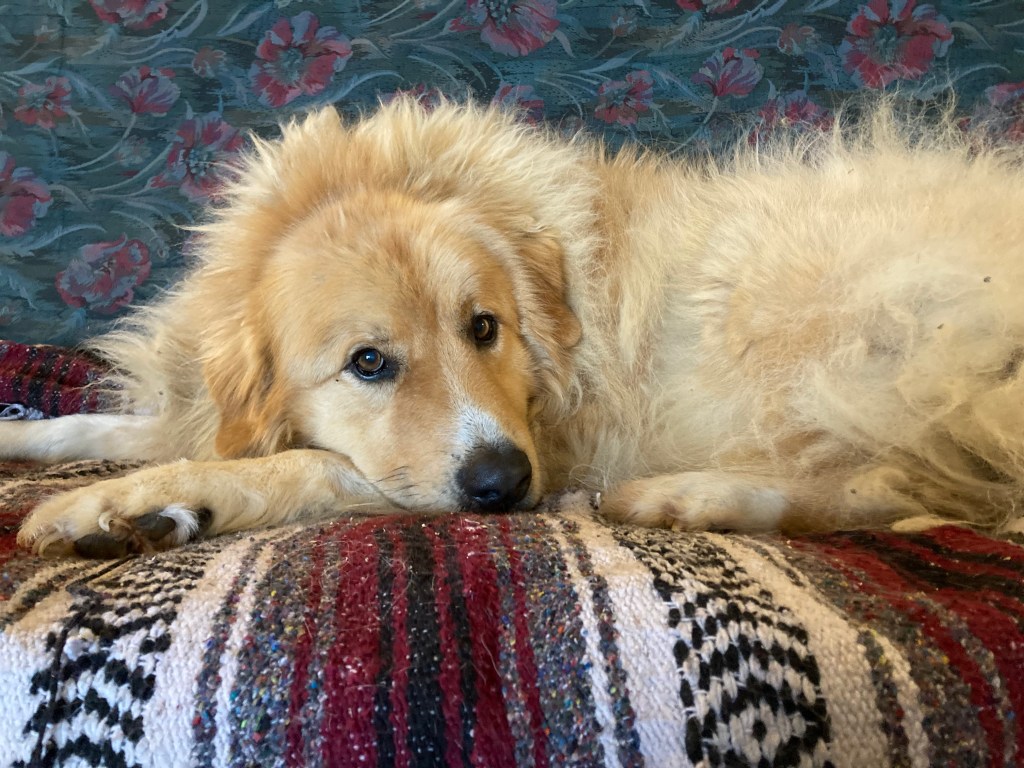
But the dogs–what to do about the dogs? Our two farm dogs, the old one that came with the farm and the young one that is only 7 1/2 months old are livestock guardian dog breeds. Neither are house dogs. They have large body masses and thick thick double coats, and have been completely unbothered by normal winter temperatures. They seek out sheltered places to sleep (currently on the lee side of the big hay bales we never moved up into the sheep pastures), make their rounds regularly, and are happy happy happy in the snow. But -14F with windchills at -35F seems a little much. The older one’s coat isn’t as good as it should be, and the young one is young. 

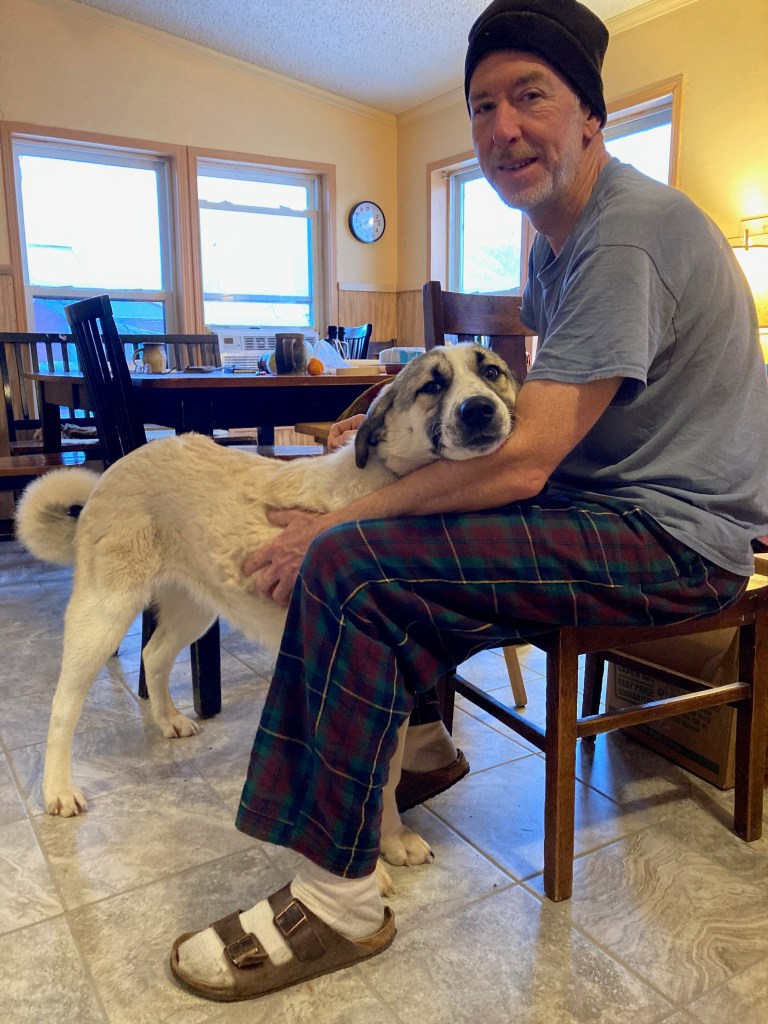
So we decided that we were going to bring them inside for the nights when it was so far below zero. They both had to be carried/dragged inside the first night. Freya stayed in the mudroom (which had a morning temperature of 9F instead of -9F, but no wind), and Chungka in the laundry room, right next to the back door. Both bolted out first thing in the morning. The next day, Chungka looked miserable outside as the temperatures dropped even more, so we again dragged him inside, but this time through the front door. Ten minutes later he was on the couch, panting, because he’s designed for cold weather rather than the heat, but he didn’t budge until late afternoon when he needed to go out. That evening we again had to drag/carry him up the stairs onto the deck, but when we opened the front door, he ran inside and jumped up onto the couch.

Chungka, now a couch dog?

As for Freya, the second night she started howling at about 1 am, so I let her out. She spent the rest of the night on patrol, with naps next to the hay bales, and this morning, with the temperatures up to -7F, is cavorting about. I think she’s fine, and we’ll probably not drag her in tonight. She’s showed no signs of being overly cold. It’s only supposed to go down to -9F tonight, and hopefully we only have a week more of this frigid weather. And then all the farm dogs will be back outside on full-time duty.

So the house is not as warm when it’s -12F outside as it is when it’s 25F, but it’s warm enough. We have long johns, wool sweaters, and double-knit hats, and a cozy down comforter for the bed. We’re still learning how to run this stove, and researching rocket mass and masonry heaters for when we build our new house, because we’re acutely aware of how much heat we’re sending up the chimney rather than keeping in the house. But this will do for now. This is, in fact, a vast improvement over living in an 1887-built house in town, and driving ten miles each way to what we want to be our life. THIS is our life–here on this farm, with all of our many projects. Though this deep freeze is inconvenient (and cold), we are working through it together and there’s lots to learn. Stay warm everyone!!!

Categories
Sheep

Don’t Eat Edna!!!

Edna in the midst of shedding!

WHY SHEEP?

We got sheep to help manage our pastures, of which we have about seven acres. That’s grass, forbs (non-grass herbaceous things—i.e. wildflowers and “weeds”), tree saplings, clover, and an abundance of “noxious weeds” that we are required by law to eradicate. We’re not much interested in mowing, but without something to knock all that back periodically, the trees and noxious weeds would take over until we had a cedar and hedge-apple forest instead of a pasture. And we do love our open spaces!

Also, we eat meat. And lamb is delicious!

So sheep were the natural solution. They eat the pasture, keeping it under control, and we eat them. Perfect!

ROTATIONAL GRAZING

Sheep grazing in the orchard at Fig Hill Farm.

We do rotational grazing with our sheep, where each day they are moved into a new paddock, contained by electric net fencing. Staying in small paddocks, the sheep are forced to eat both the desirable grasses and the less-desirable things, which keeps them from overgrazing the “good” stuff and ignoring the rest, and then that patch of pasture isn’t touched again for months. This is both good for the pasture in that it gets a good recovery period to regrow, strengthening the grass and forbs, and for the sheep because they won’t be back to that piece of ground until long after any internal parasite eggs would have hatched and then perished without having another sheep come along and eat it. The pasture also benefits from the sheep trampling the things they don’t eat, and pooping and peeing everywhere.

OUR FIRST SHEEP

We got our first four sheep in December 2020. Two months later our herd had expanded to nine, and we had to put into practice how we were going to manage our expanding numbers. The plan has always been to keep the most productive ewes, and sell or eat the rest. The first year was easy, because four out of the five lambs were ewe lambs. We kept all of them, and took the ram lamb to the meat processing plant.

Our first trip to the meat processing plant.

CULLING

So we then had eight ewes—too many! Which ones to cull? The choices were actually pretty easy. One of the original ewes had a problem with her udder, and only produced milk on one side. It worked out for the single lamb she had that year, but it’s not ideal. She also tended towards skinniness, as did another one of the original ewes. Whatever the cause, those two ewes were not staying fat on our pastures, so they were the ones who had to go. More delicious meat!

Culling makes your stock better. If you only keep the best performing animals, then their offspring is more likely to be high performing as well. Our requirements for keeping a sheep: 1) They have to do well on just grass. If they don’t keep good body condition on just grass, then they’re gone. 2) They produce strong lambs, preferably twins (though this year we had two ewes produce strong triplets. 3) They’re good mothers, who require no help lambing and who are attentive to their lambs and feed them well.

What we want are sheep who do well with OUR management system. We’ve sold some of the ewe lambs (the ones we would have kept had we been expanding our herd), but others are culled. Another ewe that will be culled this year had a stillborn her first year, and a very very puny single lamb this year, and hardly has any udder at all, so she fails at the producing strong lambs point. Culled animals are not wasted, though. They make great meat!

THE PROBLEM WITH EDNA

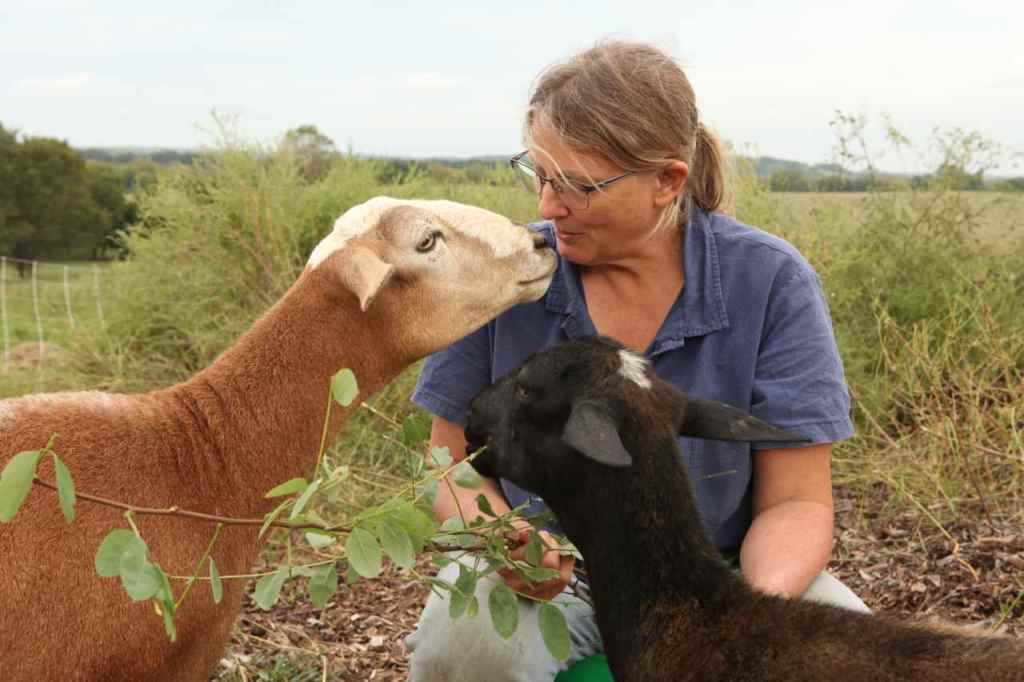
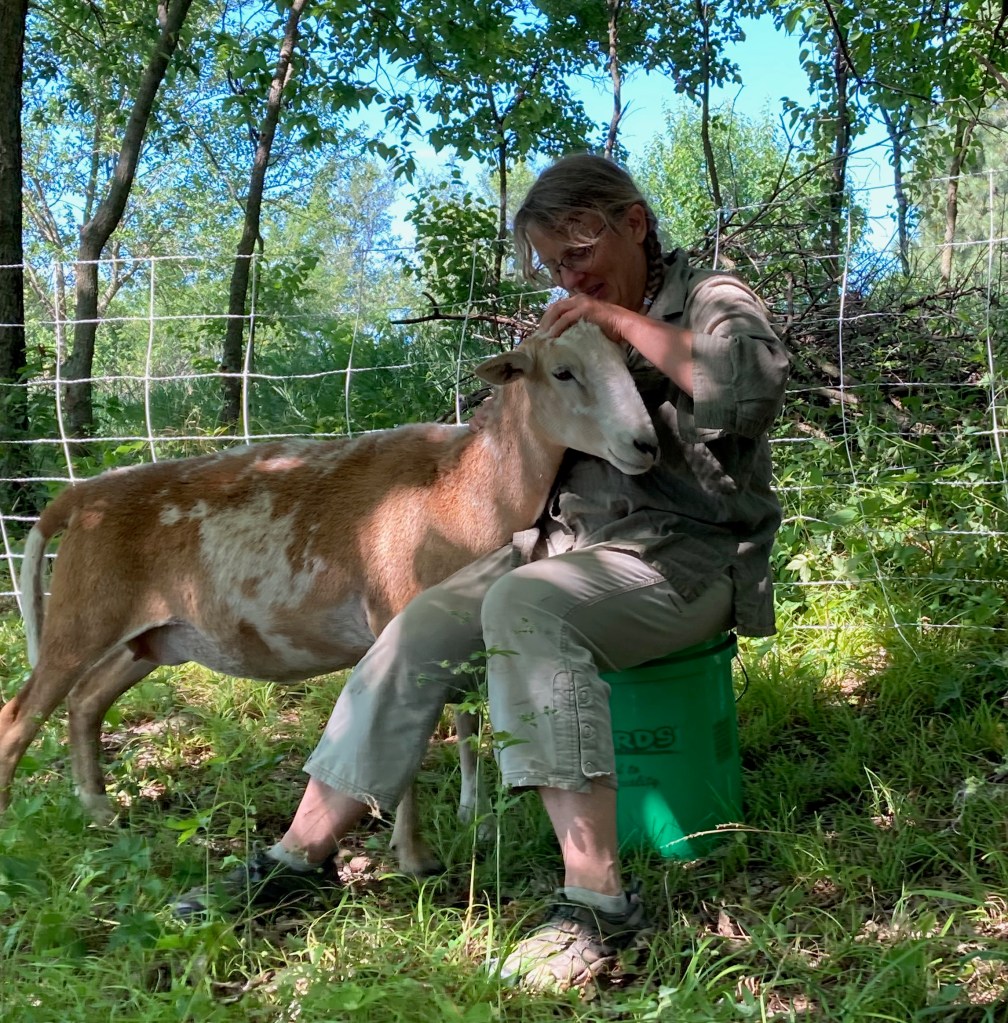
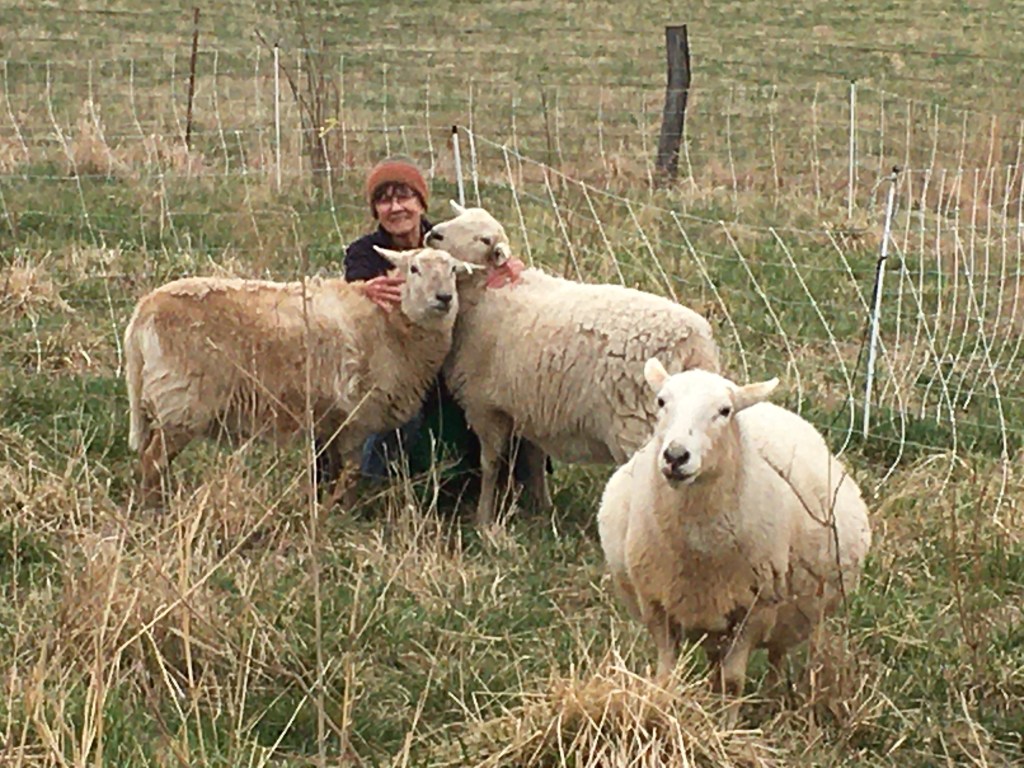
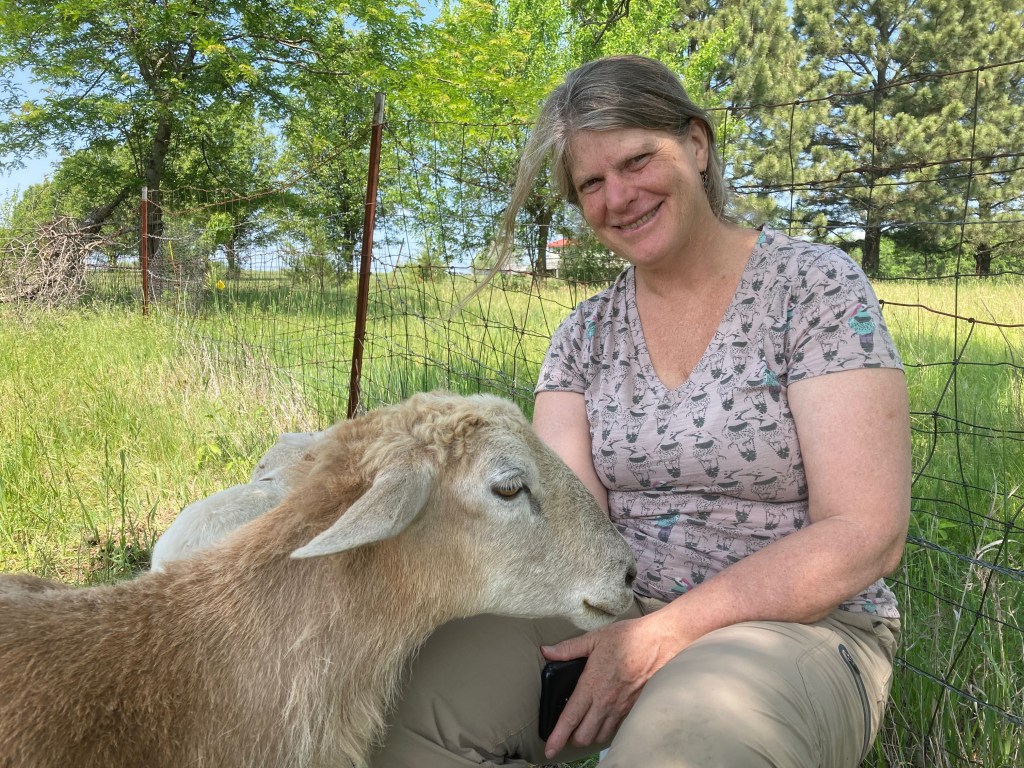
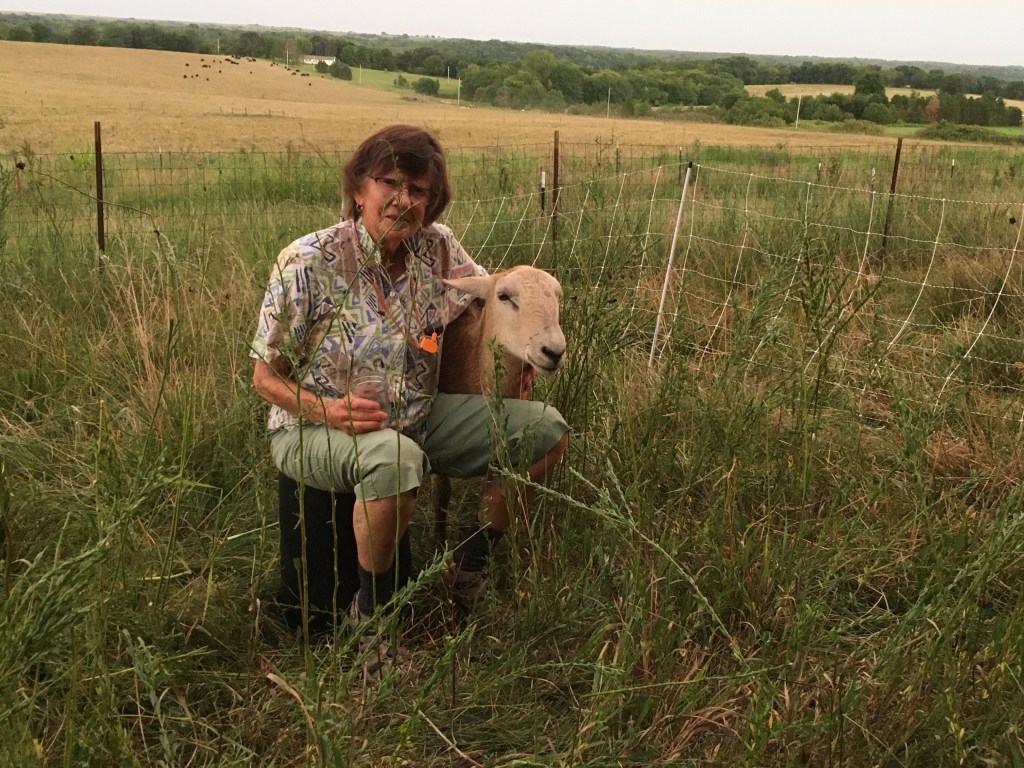
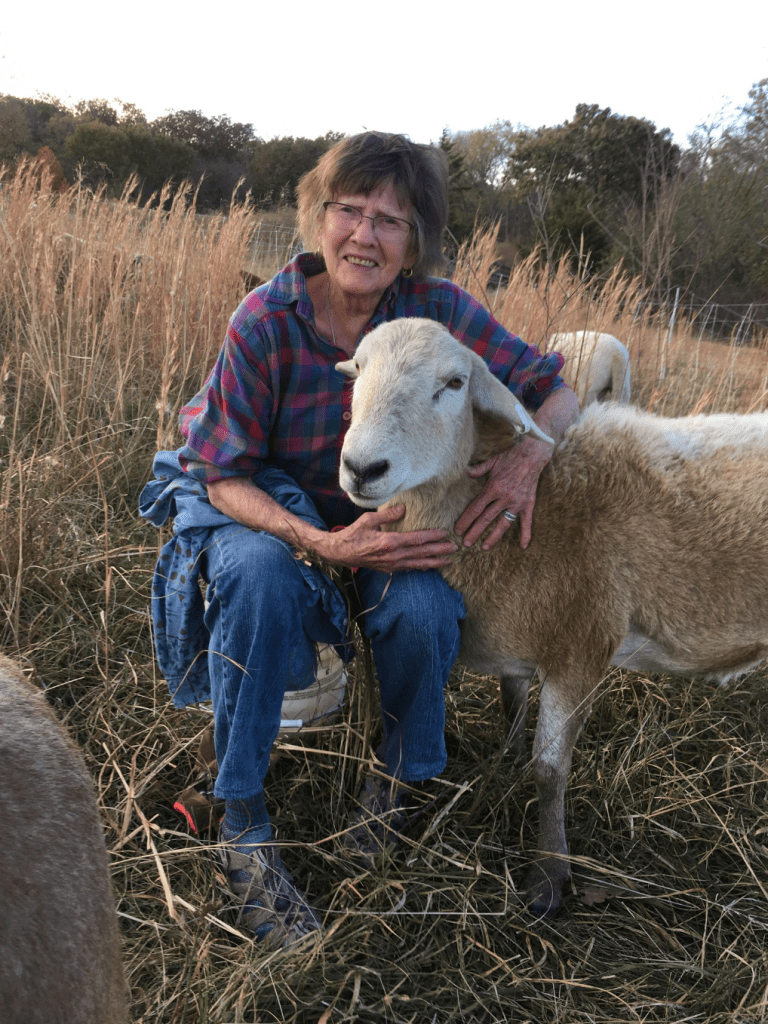
Our sheep are not pets. We have them for a purpose–multiple purposes! 1) Pasture Management, 2) Meat, and 3) Beauty, for there is nothing more beautiful than seeing a group of sheep grazing in a pasture. But we didn’t consider a fourth, very important purpose, which was the connection we would have with them. We ALL enjoy them, and my mother and I actually spend considerable time sitting with them watching them, and scratching their necks. Even Byron has his sheep moments!

And they have names. We decided to name them because it makes it easier to talk about them, as in “Lois looks like she’s carrying triplets” or “Gladys has been limping all week” or “Celeste is still nursing that lamb that’s almost as big as she is.” But they also have personalities. Some are wild and won’t let anyone near them, and others are super-friendly.

The problem with Edna, though, is that she’s my mom’s favorite. Even though we are eating the healthiest meat we could possibly eat, and our sheep are leading the most ideal lives, she’s a bit uncomfortable with eating our “pets” (she doesn’t share our idea that they’re NOT pets!). So far we’ve enjoyed Agnes, Doris, Hester, and LoBoy, and Gladys will be on the menu this fall. She keeps saying, “You can’t eat Edna!”

But even our favorites have to qualify to stay. Thank goodness Edna is keeping her contract with us. I don’t particularly want to eat Edna either. She was our first lamb, after all, and is by far the friendliest. But she has to do well on grass (which she does–she was the fattest sheep last summer) and be a good mama (she is raising triplets this year). As long as she keeps it up, we’ll get our meat elsewhere.

Edna as a new lamb!
Mom and Edna
Categories
Chickens

Cock Fighting

Everything I know about cock fighting comes from Barbara Kingsolver’s novel Animal Dreams. In it, the main character falls in love with a man who learned cock fighting from his father, and was very good at it. But the main character was horrified, saying that she thought humans should have “more heart,” and that she couldn’t “feel good about people making a spectator sport out of puncture wounds and internal hemorrhage.”

Roosters’ natural instinct is to fight for territory, to fight for their hens, and once they’ve made their point, they stop. The less dominant one backs off. As Kingsolver says, “No animal has reason to fight its own kind to the death.”

That has been our experience with roosters. We’ve always had more than one (due to various circumstances), and they’ve always (more or less) gotten along. For awhile we even had five “yard roosters” who slept up in an Eastern Red Cedar tree, and patrolled the farmyard eating whatever they could find. Two of them disappeared (lots of foxes in the neighborhood), and we ate one, but the two we couldn’t catch hung out together all winter long. Sure, there would be periodic squabbles, but they never lasted long.

That trend continued in our latest chicken configuration, with two Black Australorp cockerels and nine Black Australorp pullets, in a chicken tractor surrounded by an electric net fence. The two boys postured to each other, and sometimes got a little aggressive, but mostly they ignored each other. Then one of the yard roosters discovered he could fly over the electric fence to hang out with the ladies, and we finally gave up and let him stay. We started calling him Beater, because he kept chasing away the two cockerels, but they understood and pretty much avoided him.

But two days ago, when it was time to move the tractor, and the fence was open, the other yard rooster came in, and the two big boys had a real honest-to-goodness cockfight.

Their neck feathers stood straight out, and they flew at each other again and again, sharp talons first. Neither of them were giving up. Beater was defending his right to the hens, and the other one was trying to lay claim to them. No way was I getting in the middle of that!

Finally, though, perhaps ten or fifteen minutes later, Beater stopped fighting. He was making a weird honking sound with every breath, and I’m thinking that he was injured, even though I didn’t see any blood anywhere. The next morning he was dead.

It reminded me of the Kingsolver line about “puncture wounds and internal hemorrhage.” Beater wasn’t going to give up. But he was unlucky, and one of the other’s talons must have gotten him somewhere vital.

Now we have to decide what to do. We could probably catch the interloping rooster at night. And one of the black ones. Roosters who have lived their lives foraging for real food are delicious. And if you stew them a long time, tender enough. It’s not really fair to the pullets to have more than one rooster in with them anyway.

But as strangely beautiful as the fight between the two yard roosters was, I certainly wouldn’t want to watch it as a sport. Cock fighting is illegal in all 50 states and all 16 US territories, yet, according The New York Times, the breeding of fighting birds is alive and well in the United States, and penalties for selling, transporting, and fighting birds varies widely, with some states only fining offenders $50. I’m sure if I really wanted to, and asked the right people, I could find somewhere where it was happening, even here in Kansas. But I won’t.

I’ll stick with watching our own animals, and see what they do naturally.